Identify Underproofed Sourdough Bread with Real Examples
This guide walks through all the major signs of underproofed sourdough bread, explains what does underproofed sourdough look like in real-life examples, and shows you how to tell if sourdough is underproofed before it goes in the oven. You’ll also see how underproofed vs overproofed sourdough compares, and what you can do with a loaf once it’s baked.
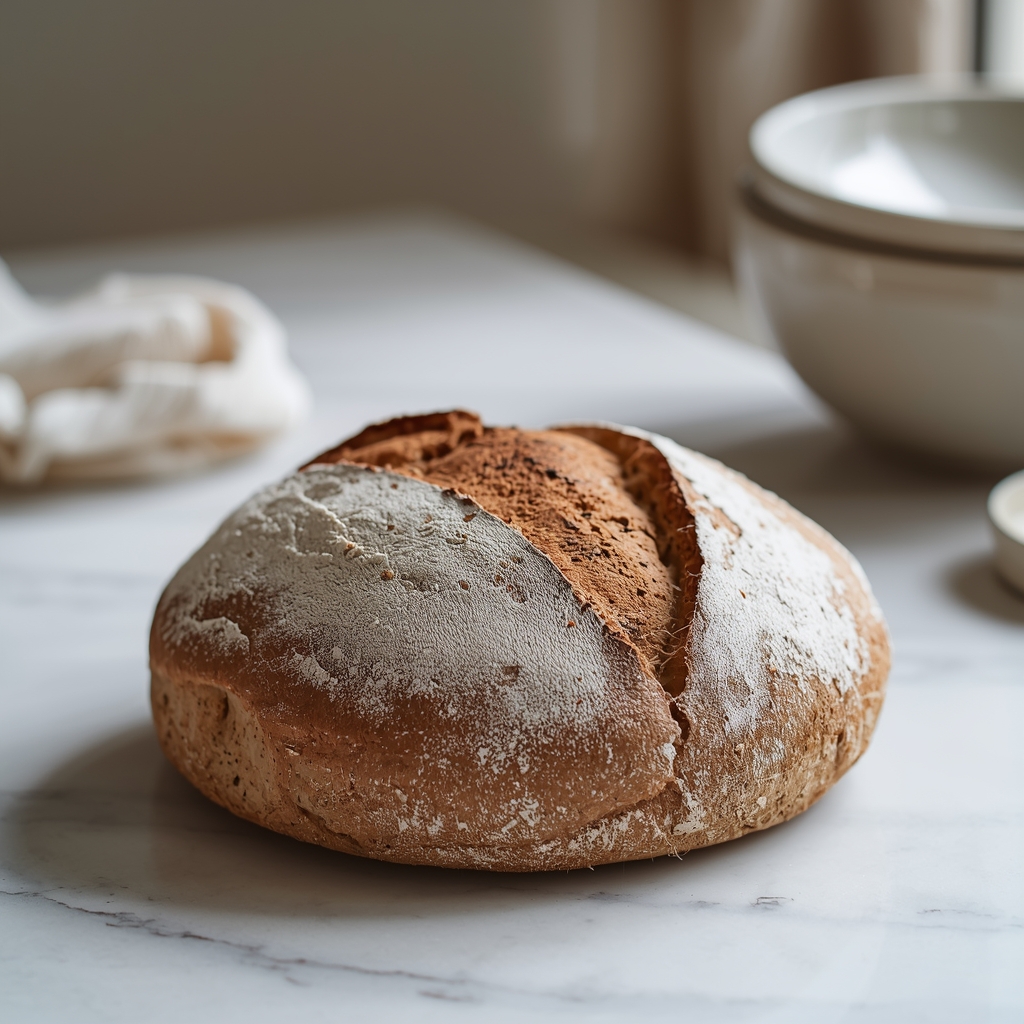
Underproofed sourdough is one of the most common (and most frustrating) problems for home bakers. The loaf looks okay coming out of the oven, but when you slice it open you find a dense, tight, sometimes gummy crumb and a crust that exploded in random places.
Pin For Later!
What, Exactly, is Proofing in Sourdough Baking?
In sourdough, “proofing” means giving the dough time for yeast and bacteria to ferment, producing gas and acids that:
- Make the dough rise
- Develop flavor
- Soften the crumb
There are two main stages:
- Bulk fermentation (bulk rise)
- This is the first rise, usually after mixing and initial kneading/folding.
- The dough should increase in volume (often 50–100%), become puffier, and show bubbles along the sides and surface.
- Understanding bulk fermentation signs sourdough—like increased volume, domed top, and visible bubbles—is key to avoiding underproofed sourdough dough.
- Final proof
- This happens after shaping, when the dough rests in a basket or tin and rises again before baking.
- This is where many people end up with sourdough underproofed: they don’t wait long enough, or they misread the dough’s cues.
Many bakers look for a simple rule for how long to proof sourdough bread, but there is no single correct number. Time depends on:
- Dough temperature
- Room / fridge temperature
- Starter strength
- Hydration
- Flour type
A good sourdough fermentation timing guide focuses more on signs than minutes. As a rough idea at 75–78°F (24–26°C):
- Bulk fermentation might take 4–6 hours
- Final proof at room temp might take 1–3 hours
- Cold proof in the fridge might take 8–16 hours
This leads to a common question: cold proof vs room temperature proof sourdough—which is better? Neither is automatically “best.” Cold proofing is slower and gives you scheduling flexibility and often better flavor, but if your dough wasn’t fermented enough during bulk, a long cold proof won’t fully fix an already under proofed sourdough. You still need to read the dough during both sourdough bulk rise vs final proof.
Want to Make Your Own Sourdough Starter?
A strong, active starter is essential if you want to avoid underproofed sourdough.
Very often, sourdough proofing mistakes beginners make come back to a starter that:
- Isn’t rising and falling predictably
- Smells weak or “floury” rather than pleasantly tangy
- Takes more than 8–10 hours to double in size after feeding
Basic starter guidelines:
- Feed it regularly (1–2 times a day at room temp)
- Keep it at a consistent hydration (commonly 100%: equal parts flour and water by weight)
- Bake when your starter is at or near its peak (doubled or more in volume, airy and bubbly)
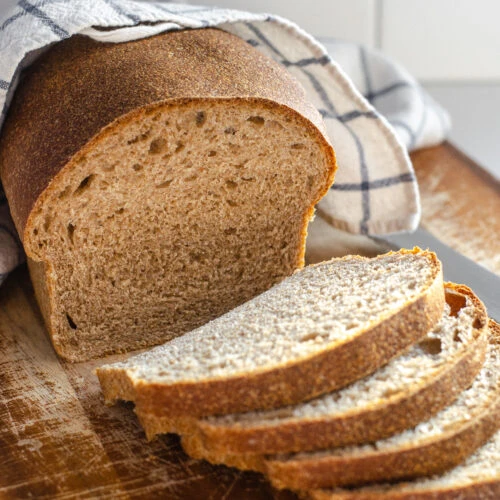
Once your starter is healthy, you can put it to work in beginner-friendly sandwich-style loaves like this soft, sliceable Sourdough Sandwich Bread or slightly enriched loaves such as Honey Oat Sourdough Bread. Both are great practice for learning to read fermentation and avoid underproofed sourdough dough.
If your starter is sluggish, even “perfect” proofing time will still give you underproofed sourdough after baking—because the dough never had enough fermentation power to begin with.
Underproofed Sourdough: A Common Baking Mistake
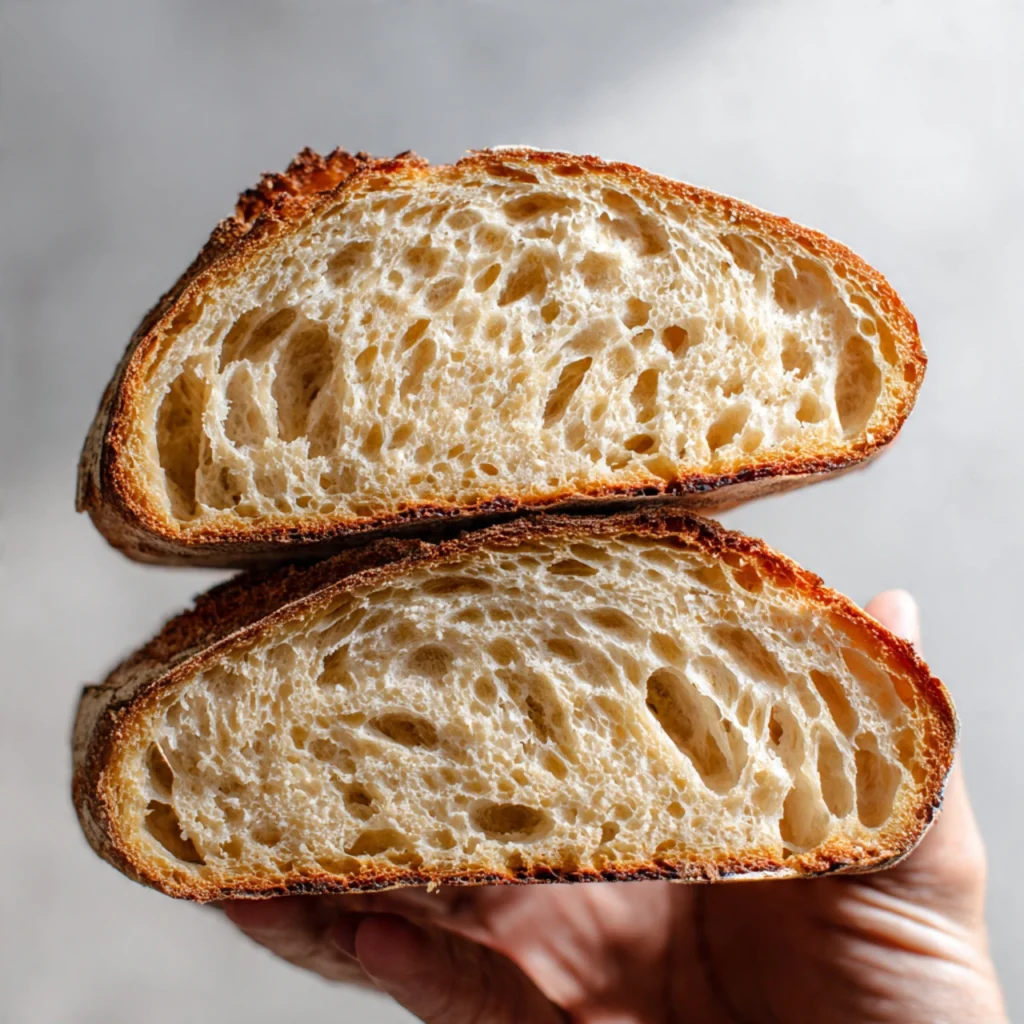
Underproofing simply means: the dough didn’t ferment long enough.
When that happens, you’ll see several typical issues:
- Poor internal structure: tight, heavy, or gummy crumb
- Excessive, uneven oven spring: the loaf blows up like a pyramid or splits randomly
- Crust problems: cracks along the sides or a very hard crust
- Flat flavor: not enough acidity or wheat sweetness
Many new bakers confuse underproofed vs overproofed sourdough:
- Underproofed sourdough (this article’s focus):
- Strong oven spring
- Blowouts or big cracks
- Tight or gummy interior
- Overproofed sourdough:
- Very little oven spring
- Dough may collapse or spread instead of holding its shape
- Crumb can be overly open and fragile or collapsed and sticky
If you’ve ever pulled a loaf out of the oven and wondered, “what does underproofed sourdough look like?”, you’re usually looking for:
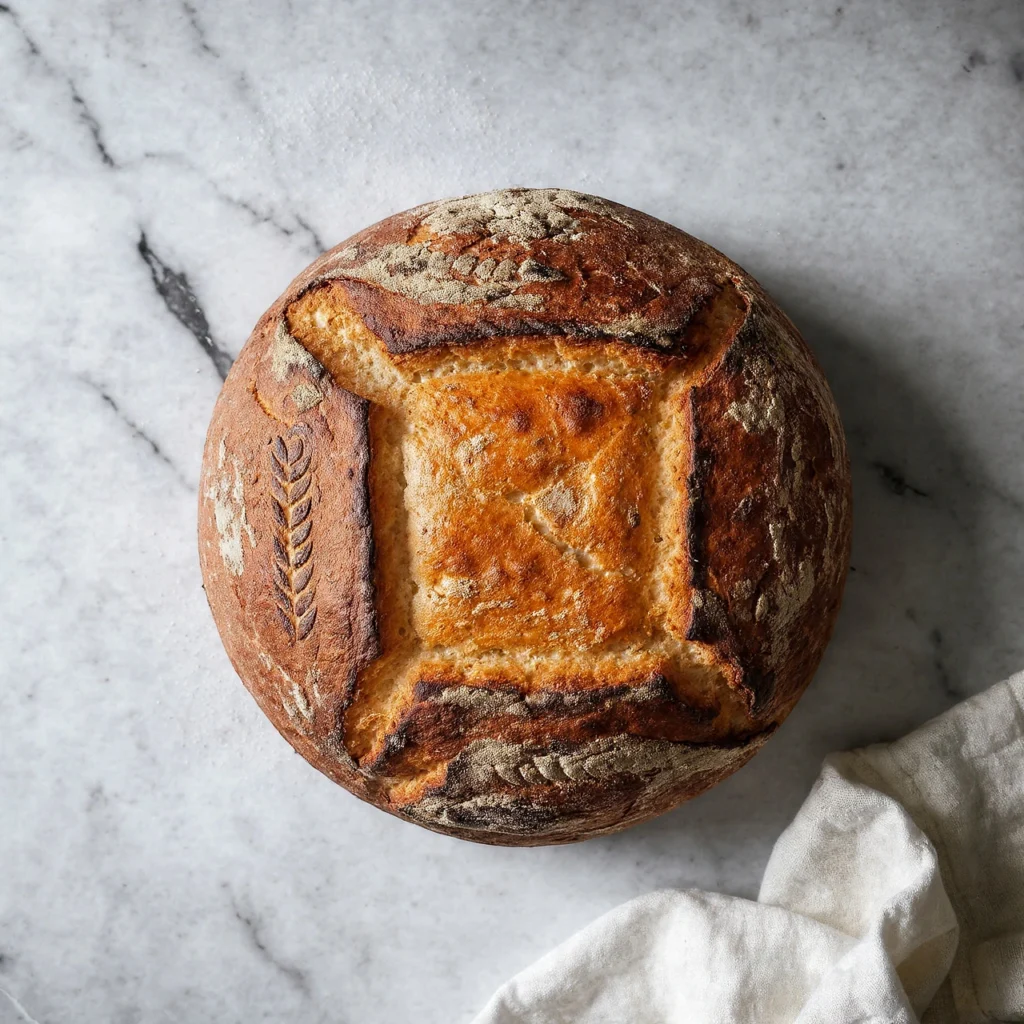
- A very tall or sharply domed “pyramid” top
- Burst seams where you didn’t score
- A dense bottom or tight, patchy crumb inside
These underproofed sourdough oven spring issues often come with sourdough scoring problems underproofed: your score lines don’t bloom cleanly; instead the loaf tears unpredictably.
Below, we’ll go through real-world underproofed sourdough crumb examples and surface cues so you can immediately recognize when your sourdough is underproofed.
7 Signs of Underproofed Sourdough
Sign #1: Stiff Dough
During both bulk fermentation and final proof, dough should progress from elastic and somewhat tight to soft, airy, and slightly jiggly.
With underproofed sourdough dough, you’ll often notice:
- It feels firm and resistant when you press it
- It doesn’t wobble much when you shake the banneton or tray gently
- It feels heavy relative to its size
Example:
At the end of bulk fermentation, your dough has only risen about 20–30%, and when you try to shape it, it fights back and easily tears. This is a classic sign that bulk was cut short—one of the clearest bulk fermentation signs sourdough bakers should learn.
Properly fermented dough will feel:
- Airy and slightly puffy
- Easy to stretch without tearing
- Slightly sticky but not stiff or dry
If it still feels like a solid, tight ball, your underproofed sourdough journey has already started.
Sign #2: Cracked Top or Sides and Pyramid Top
When dough goes into the oven underproofed, it still has a lot of “unused” fermentation potential. The intense oven heat activates the yeast quickly, causing aggressive oven spring.
That can lead to:
- A sharply domed, almost triangular “pyramid” top
- Big, jagged cracks along the sides or bottom
- Your score line barely opening while other random tears appear
These are classic underproofed sourdough oven spring issues.
Real example:
You score your loaf with a clean, deep slash, expecting a nice ear. Instead:
- The main score only opens a bit
- A huge tear opens on the side of the loaf
- The whole loaf looks like it’s trying to burst through one corner
Those unexpected blowouts are sourdough scoring problems underproofed. The dough was too tight and full of trapped gas, so it ruptured in weak spots rather than expanding evenly through your score.
Sign #3: Very Tight Crumb or Gummy Texture, Often Both
Inside the loaf, underproofed sourdough dense crumb is one of the biggest giveaways.
Symptoms:
- The crumb is compact with very small or barely visible holes
- The bottom half of the loaf may seem especially dense
- The center can be slightly wet or “custardy,” even though the crust looks well baked
If you’ve asked “why is my sourdough tight and gummy?”, underproofing is a top suspect.
Real example:
You bake a loaf to a dark golden brown, let it cool for an hour, then cut in. The knife drags through the loaf, and:
- The slices look a bit shiny or sticky in the center
- You see few, if any, medium-sized holes
- The slice feels heavy for its thickness
This is one of the most common issues in any sourdough crumb troubleshooting guide. The dough simply didn’t ferment long enough to create and stabilize an open crumb.
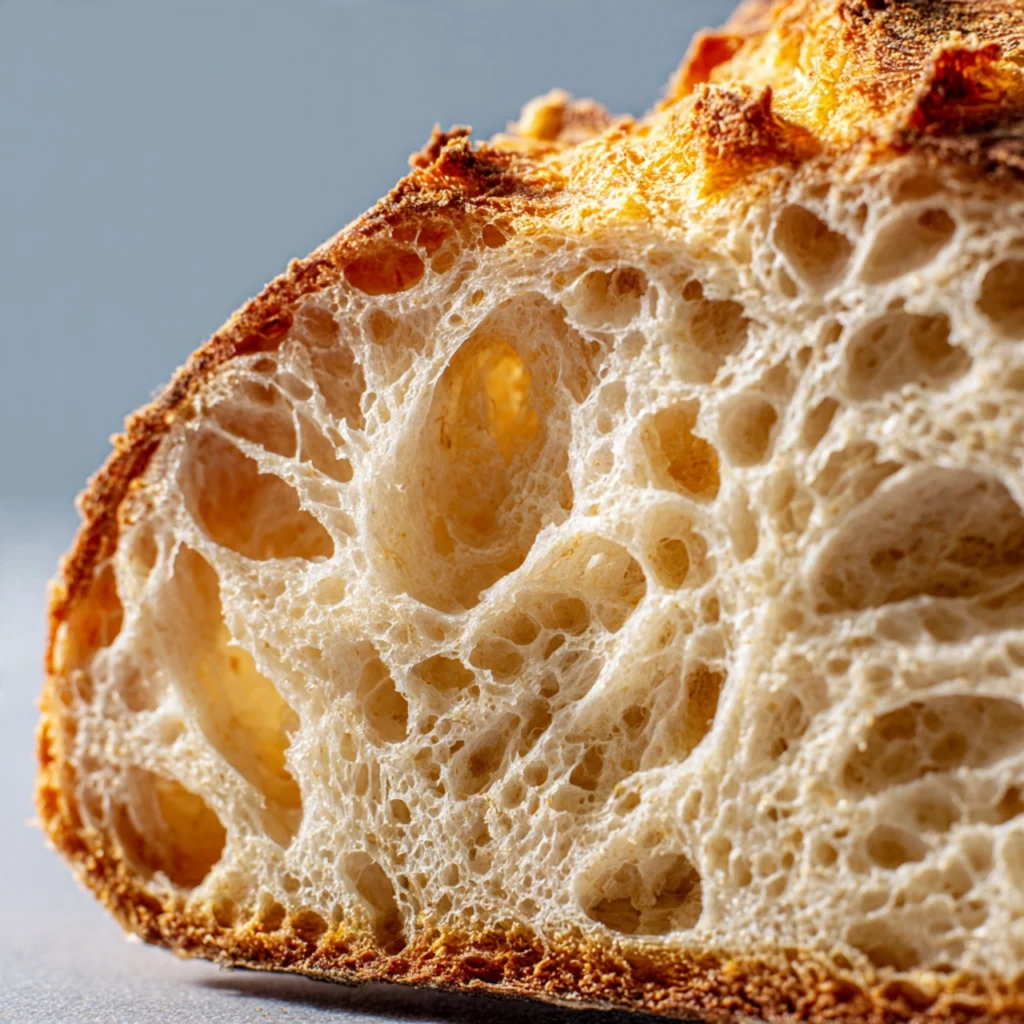
Sign #4: The Crumb Features Small or Irregular Holes, Sometimes With ”Tunnels”
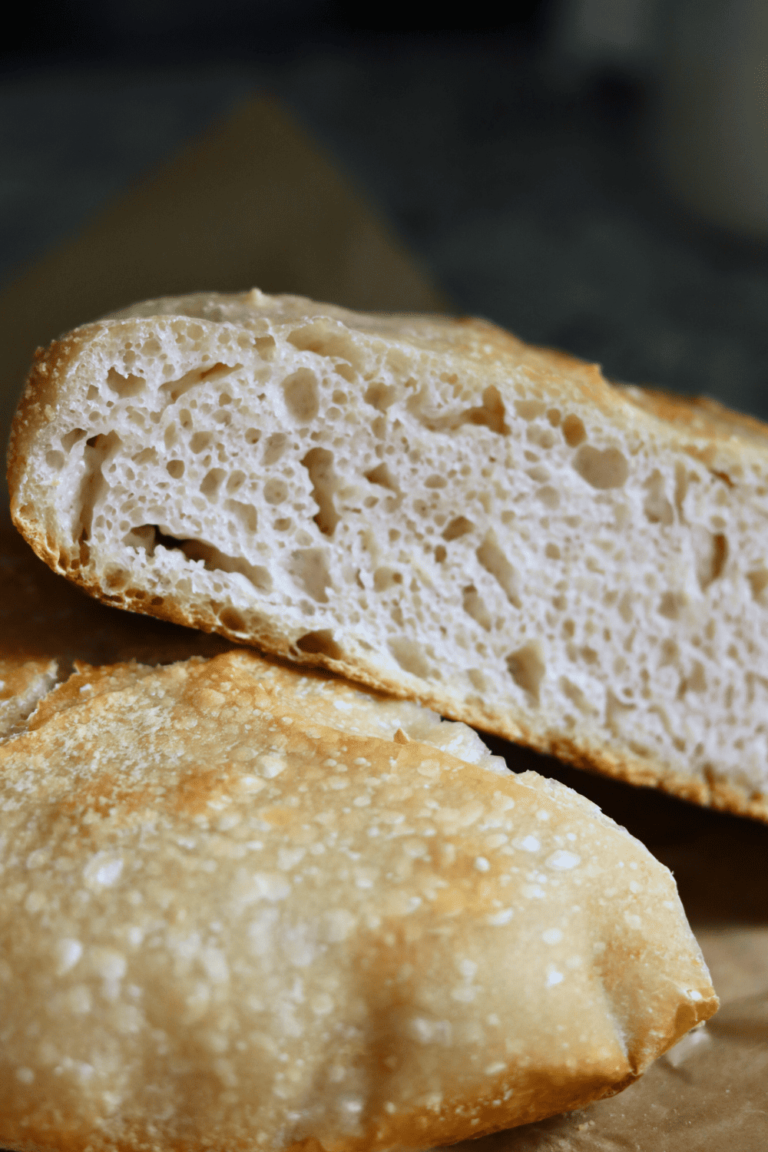
Not every underproofed loaf looks solid inside. Some underproofed sourdough crumb examples show:
- Mostly small, tight holes
- A few larger, odd-shaped pockets
- Sometimes vertical “tunnels” running through the top third of the loaf
Those tunnels form when gas is trying to escape but the dough structure isn’t fully developed, so bubbles migrate and collect in strange places.
Real example:
You slice the loaf and see:
- Normal-looking crumb toward the crust
- Strange elongated holes or channels just under the top crust
- Very tight crumb at the bottom
This uneven structure almost always points to sourdough underproofed during either bulk, final proof, or both.
Sign #5: Hard Crust
Underproofing doesn’t just affect the inside. Because underproofed dough is denser, it:
- Needs more baking time for the interior to set
- Often ends up with an extra-thick, hard crust
You may notice:
- A crust that’s overly tough and difficult to slice
- Cracks that look deep and rough, rather than thin and delicate
While some rustic sourdoughs have naturally hearty crusts, a very thick, almost armor-like crust combined with a tight crumb inside is a strong sign the loaf was under proofed sourdough.
Sign #6: Flavor Doesn’t Develop Fully
Fermentation time is flavor time. If your dough is underproofed, flavors won’t have long enough to develop.
Signs:
- The bread tastes more “floury” than wheaty or nutty
- Acidity (tang) is very mild or absent
- The aroma is bland rather than rich and complex
Example:
You follow a recipe exactly but cut bulk fermentation short because the dough “looked big enough.”
Your finished loaf:
- Looks decently risen
- Slices fine
- Tastes flat—like plain white bread, not sourdough
That lack of depth is another indicator of underproofed sourdough after baking.
If you want to taste how fuller fermentation and flavor development shine in enriched doughs, try recipes such as Sourdough Pumpkin Coffee Cake, fragrant Sourdough Masala Chai Bread, or lightly sweet Sourdough Crescent Rolls once your proofing is dialed in.
Sign #7: The Dough Flunks the Poke Test
The sourdough proofing test (poke test) is one of the simplest ways to gauge final proof—and one of the best ways for how to tell if sourdough is underproofed.
How to do it:
- Dust a fingertip with flour.
- Gently press the surface of the proofed dough about ½ inch (1–1.5 cm) deep.
- Watch how the indentation behaves.
- Underproofed: The dough springs back quickly and almost completely; the dent disappears.
- Properly proofed: The dent springs back slowly and partially, leaving a slight impression.
- Overproofed: The dent barely springs back or not at all; it may even cause the dough to deflate.
If your dough snaps back instantly, it’s a classic sign of underproofed sourdough dough that still needs more time.
6 Causes of Underproofed Dough
Understanding why your sourdough is underproofed is the first step in how to fix underproofed sourdough for your next bake.
1. Short Proof Time
The most obvious cause: the dough just didn’t get enough time.
Common reasons:
- Strictly following a recipe’s clock instead of watching the dough
- Baking early because you’re in a rush
- Ending bulk as soon as you see some rise, even if it’s not enough
Instead of asking only how long to proof sourdough bread, focus on:
- Volume increase (often 50–100% in bulk)
- Bubble development
- Texture changes (soft, billowy dough)
A flexible sourdough fermentation timing guide will always emphasize these visual and tactile cues over exact hours.
2. Cool Temperature
Yeast and bacteria slow way down in cool environments. A dough that would properly ferment in 4–5 hours at 78°F (25–26°C) might need 6–8+ hours at 70°F (21°C).
Problems happen when:
- You keep your old time schedule even though your kitchen is cooler
- You place your dough in a drafty or cold spot
- You underestimate how much longer a cold proof vs room temperature proof sourdough really needs
If you notice each loaf in winter is slightly tight or gummy, you may be underproofing simply because your environment is colder.
3. Inactive Starter
A weak or underfed starter is a major cause of sourdough underproofed.
Signs your starter might be the culprit:
- Takes more than 8–10 hours to double after feeding
- Only produces a few small bubbles
- Smells flat, like wet flour, instead of tangy and yeasty
Even if you give the dough plenty of time, an inactive starter can leave you with underproofed sourdough after baking—the dough never had enough fermentation power in the first place.
4. Too Much Flour
Adding too much flour (or not enough water) results in:
- Very stiff dough
- Poor gluten development
- Difficulty in expansion during fermentation
You might:
- Keep dusting with flour during mixing and folding because the dough feels sticky
- End up with a dry, non-sticky ball that barely spreads
This leads to underproofed sourdough dense crumb because the dough is literally too tight and dry to expand, even with adequate time.
5. Overworking the Dough
While folding and some kneading are important, overworking can:
- Over-tighten the gluten network
- Squeeze out gas that should be trapped in the dough
- Make it hard for the dough to relax and expand during proofing
If you:
- Knead aggressively for a long time
- Stretch and fold constantly throughout bulk instead of letting the dough rest
…you can wind up with an elastic but resistant dough that shows many of the same signs as underproofed sourdough: tight crumb, excessive tearing, and stiff texture.
6. Incorrect Hydration
Hydration—your water-to-flour ratio—plays a huge role in crumb structure.
- Too low hydration: Dough is stiff, harder for gas to expand, leading to a tight crumb and pyramid-shaped loaves.
- Too high hydration (for your flour/skill level): You may cut fermentation short because the dough feels too slack or sticky, again yielding an under proofed sourdough despite the wet dough.
Balancing hydration with your flour type and technique is crucial for avoiding chronic underproofing.
After seeing these causes, you can probably already guess how to avoid underproofing sourdough:
- Watch dough cues, not just the clock
- Adjust for room temperature
- Keep your starter strong
- Be cautious with extra flour
- Don’t over-knead
- Choose hydration that matches your experience level
Use these as part of your own sourdough fermentation timing guide so you proof smarter each bake.
3 Signs of Properly Proofed Sourdough Bread:
When everything goes right, your loaf will show clear indicators of good proofing.
Rounded shape
A well-proofed loaf:
- Holds a rounded, slightly domed shape
- Doesn’t collapse or spread like a pancake (overproofed)
- Doesn’t explode into a tall pyramid with random cracks (underproofed)
Seeing how your loaf stands after baking is a great way to understand underproofed vs overproofed sourdough in practice.
No dense crumb
Inside, a properly proofed loaf:
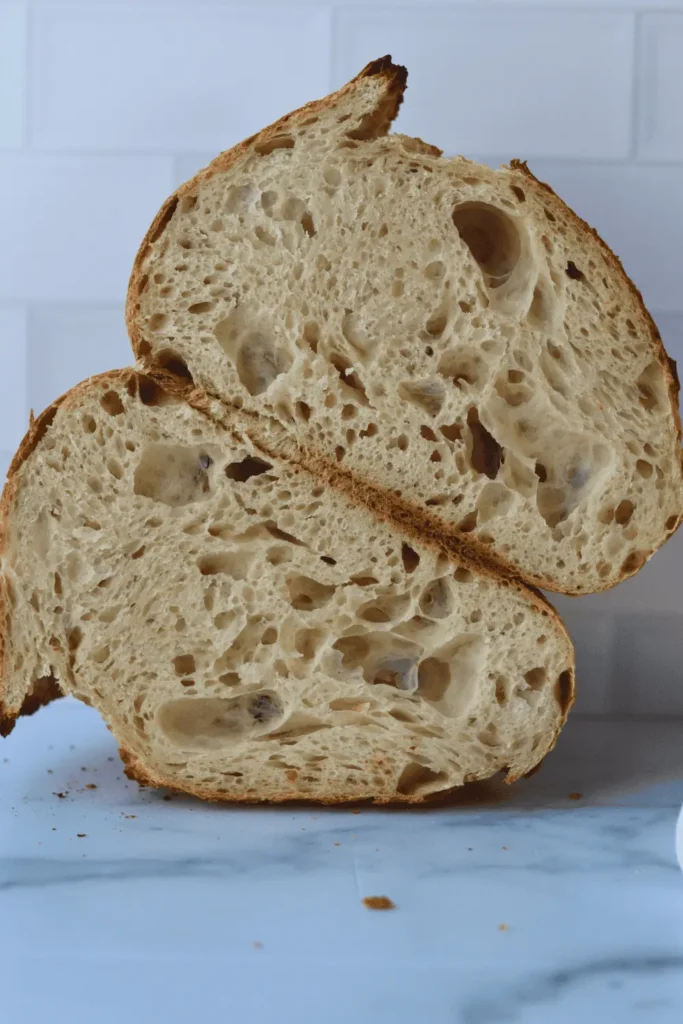
- Has a light, tender crumb
- Feels relatively light for its size
- Cuts cleanly without the knife dragging
You should not see a heavy, compact interior or sticky streaks in the center.
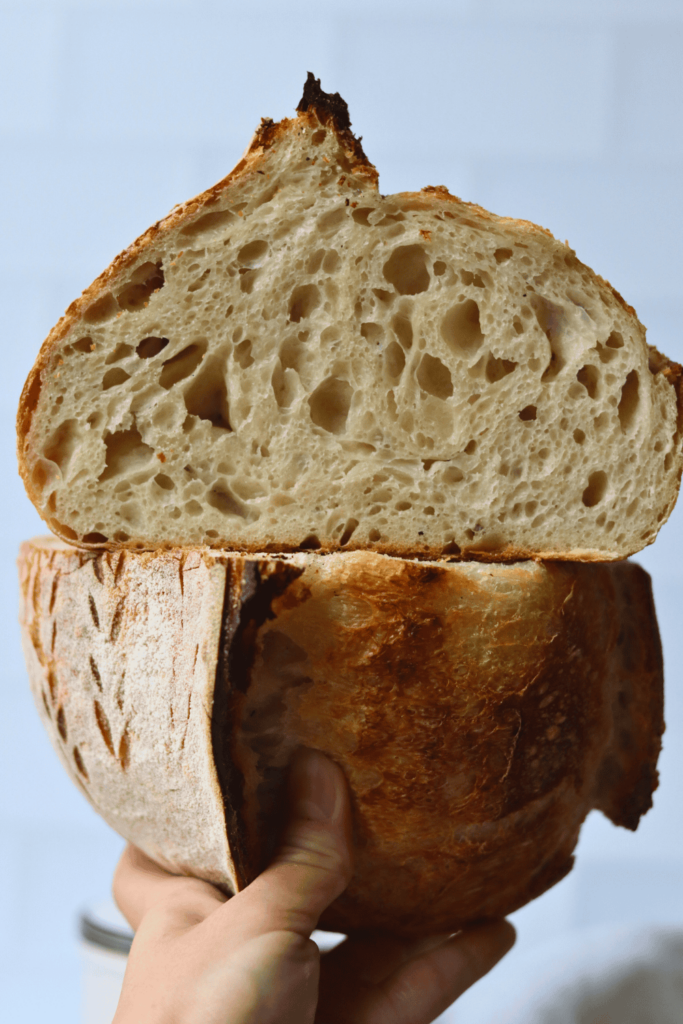
Consistent holes throughout the crumb
A balanced crumb will show:
- Mostly small- to medium-sized holes
- Even distribution from top to bottom
- A few larger, irregular holes are fine, but not massive tunnels
This consistency is the opposite of the uneven, tunnel-riddled underproofed sourdough crumb examples we looked at earlier.
Signs Your Dough is Properly Proofed
Here’s what to look for :
Use these cues during final proof as a quick checklist:
- Volume: The shaped dough has noticeably expanded (typically 50–75% bigger) but not doubled and collapsing.
- Surface: Smooth, slightly domed, and maybe a bit bubbly around the edges.
- Texture: When you gently shake the basket or tray, the dough has a soft jiggle; it doesn’t feel like a rock.
- Aroma: Smells pleasantly yeasty and mildly tangy, not raw or floury.
- Poke test: The sourdough proofing test (poke test) leaves a slow, partial spring-back with a slight indentation.
Used together, these are more reliable than any exact minutes in a recipe and form the backbone of a solid sourdough crumb troubleshooting guide.
How to Use Under-Proofed Sourdough Bread:
Once a loaf is baked, you can’t truly “fix” the interior structure. How to fix underproofed sourdough at that point is really about:
- Learning from it for next time, and
- Repurposing the bread so it’s still delicious.
Learn from the loaf
Use your underproofed loaf as a learning tool:
- Compare your results to the underproofed sourdough crumb examples described earlier.
- Think back through your process:
- Did bulk fermentation reach the right volume increase?
- Was your kitchen cooler than usual?
- Was your starter at its peak?
Treat it like your own mini sourdough fermentation timing guide and keep notes. This is how you gradually master how to avoid underproofing sourdough.
Make the most of underproofed sourdough after baking
Even a loaf of underproofed sourdough can taste good when used creatively:
- Toast & bruschetta: Dense slices make excellent toast—top with olive oil, tomatoes, cheese, or spreads.
- Crostini & crackers: Slice thin, toast until crisp for dips and cheese boards.
- Croutons: Cube, toss with oil and seasoning, and bake until crunchy.
- Breadcrumbs: Dry completely and blitz into breadcrumbs for coating or toppings.
- Strata or bread pudding: Dense bread soaks custard beautifully for savory or sweet bakes.
If you prefer not to repurpose an underproofed loaf, you can always turn excess starter or discard into bakes that don’t rely on an airy crumb, such as Easy Sourdough Pumpkin Bread, Apple Cider Sourdough Donut Quick Bread, or Sourdough Discard Apple Cinnamon Quick Bread.
Once you’re getting consistent proofing results and avoiding sourdough underproofed issues, put your skills to work with a variety of recipes:
- Sourdough Sandwich Bread
- Sourdough Ciabatta Rolls
- Sourdough Pumpkin Bagels
- Sourdough Apple Cider Donuts
- Easy Sourdough Pumpkin Bread
- Apple Cider Sourdough Donut Quick Bread
- Jalapeño and Cheddar Sourdough Bread
- Sourdough Pumpkin Coffee Cake
- Sourdough Masala Chai Bread
- Sourdough Discard Apple Cinnamon Quick Bread
- Sourdough Cinnamon Raisin Bagels
- Honey Oat Sourdough Bread
- Sourdough Crescent Rolls
FAQs
What exactly is underproofed sourdough bread?
Underproofed sourdough is dough that has not risen enough during its final proof before baking. This means the gas bubbles produced by yeast and bacteria are underdeveloped, resulting in a dense crumb, limited oven spring, and sometimes a yeasty or flat flavor.
How can I tell if my dough is underproofed before baking?
Look for signs such as minimal volume increase, a tight or firm surface, a quick rebound in the poke test, and difficulty forming a windowpane when stretching the dough. If the dough feels compact or resists gentle pressure, it may need more proofing.
What does underproofed bread look and taste like after baking?
Baked underproofed sourdough typically has a dense, uniform crumb, thick crust relative to the interior, limited rise in the oven, and sometimes a sharp yeasty or bland flavor. The interior near the crust can also feel gummy.
How can I prevent underproofing in my sourdough?
Use an active starter, monitor the dough instead of relying strictly on time, perform the poke test, adjust proofing temperature, maintain proper hydration, and allow sufficient bulk fermentation before shaping.
Can underproofed bread still be used?
Yes. While it may not have the airy texture of properly proofed sourdough, underproofed bread is still usable for toast, sandwiches, croutons, or breadcrumbs. It also provides a learning opportunity to improve proofing in future bakes.