Sourdough Bagel Recipe: Bakery Results at Home
You’ve followed the recipe. You’ve done the boil. And yet your bagels came out dense, pale, and nothing like the bakery version in your head. Sound familiar? Most homemade bagel recipes skip the details that actually matter. That’s exactly why this sourdough bagel recipe was built differently around real technique, not shortcuts. From building the right starter activity to nailing the honey-water boil, every step is explained in plain language so you get a chewy, golden result the very first time. If you’ve been chasing bakery results at home, this is where it finally clicks.
Ingredients & Substitutions
* To find precise measurements, scroll to the bottom of this post to find the recipe card*
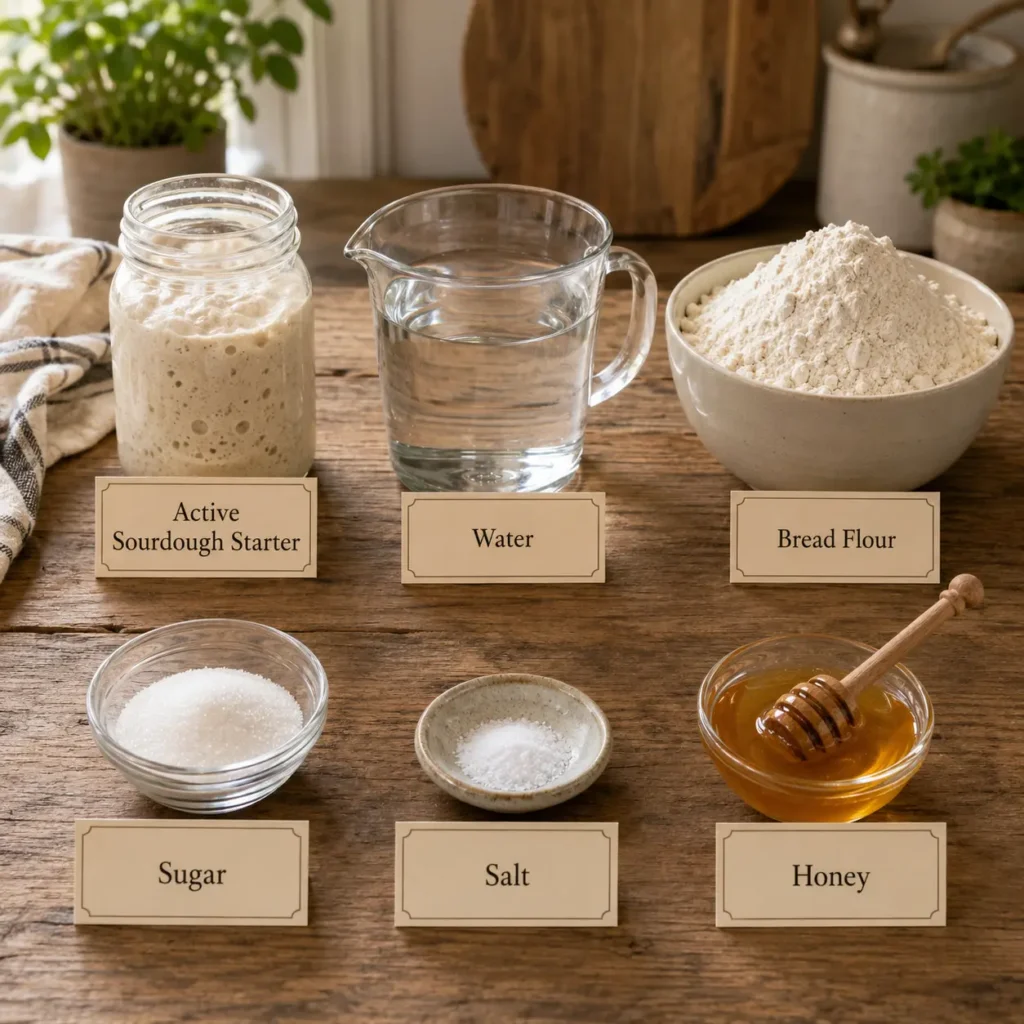
- Active Sourdough Starter: An active and bubbly starter will give your bagels the best rise.
- Water: Use room temperature, filtered water for consistent results.
- Bread Flour: While you can technically use all-purpose flour for this recipe, I highly recommend using bread flour. It has a higher protein content, which allows the dough to rise more effectively, resulting in chewier and more enjoyable sourdough bagels.
- Sugar: I used white sugar for a touch of sweetness, but you can substitute it with other sugars like cane or coconut sugar.
- Salt: Any unrefined salt works, but my favourite is Redmond’s unrefined salt for its added minerals.
- Honey: Adding a little honey to the boiling water bath gives your sourdough bagels a perfect golden-brown, chewy crust when baked. You can also substitute honey with brown sugar or maple syrup.

Sourdough Tip: Not sure if your discard is the right hydration for this recipe? Use our free Sourdough Hydration Calculator to check your starter ratios before baking. A 100% hydration discard works perfectly in this recipe as written.
Baking Time For Sourdough Bagels
| Time | Process |
|---|---|
| 8:00 PM | Make and knead the dough. Cover the bowl and let it rest for 1 hour. |
| 9:00 PM | Knead the bagel dough for 30 seconds, cover it, and let it rest overnight for 8-12 hours. |
| 7:00 AM | Remove the dough from the bowl and cut it into 8 equal pieces. Roll and shape each piece into small dough balls. Poke a hole in the center of each ball and stretch it to shape. Cover and let them rest for 20-60 minutes until they puff up. |
| 8:00 AM | Boil the bagels for 30 seconds on each side. Dip them into your choice of seasonings. Bake for 20-25 minutes at 425 degrees Fahrenheit. |
How to Make Sourdough Bagels
Make the Dough
Step 1: In a big bowl, toss in your active starter, warm water, and sugar. Stir it up until it resembles a milky liquid. Then, mix in the bread flour and salt with the dough until everything is well combined.
Step 2: Next, take a small piece of the bagel dough and lift it above the rest, fold it over, and press it down into the dough using the heel of your hand. Keep doing this while turning the bowl clockwise for about 5-6 minutes.
Step 3: Cover the dough and let it chill for 60 minutes.
Stretch and Fold
Step 4: After an hour of resting, do the same “stretch, fold, and push” thing with the heel of your hand for 30 seconds.
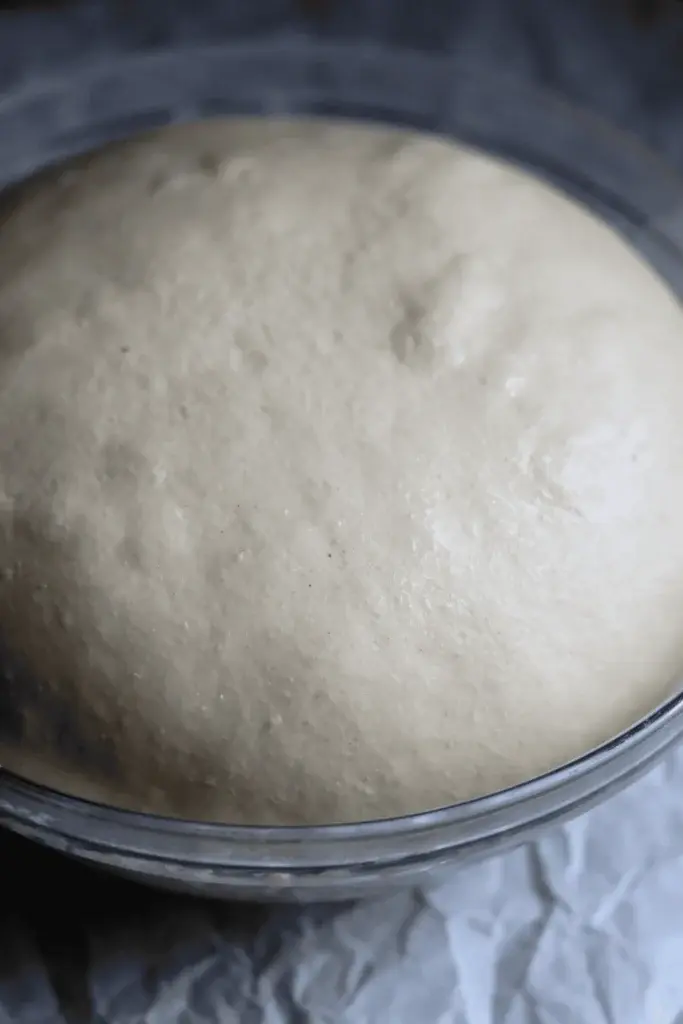
Step 5: Put a reusable shower cap over the bowl and set the dough in a warm spot to let it double in size.
Shape
Step 6: After the dough has roughly doubled in size, carefully take the sourdough bagel dough out of the bowl and set it on your work surface. There’s no need to dust with flour.
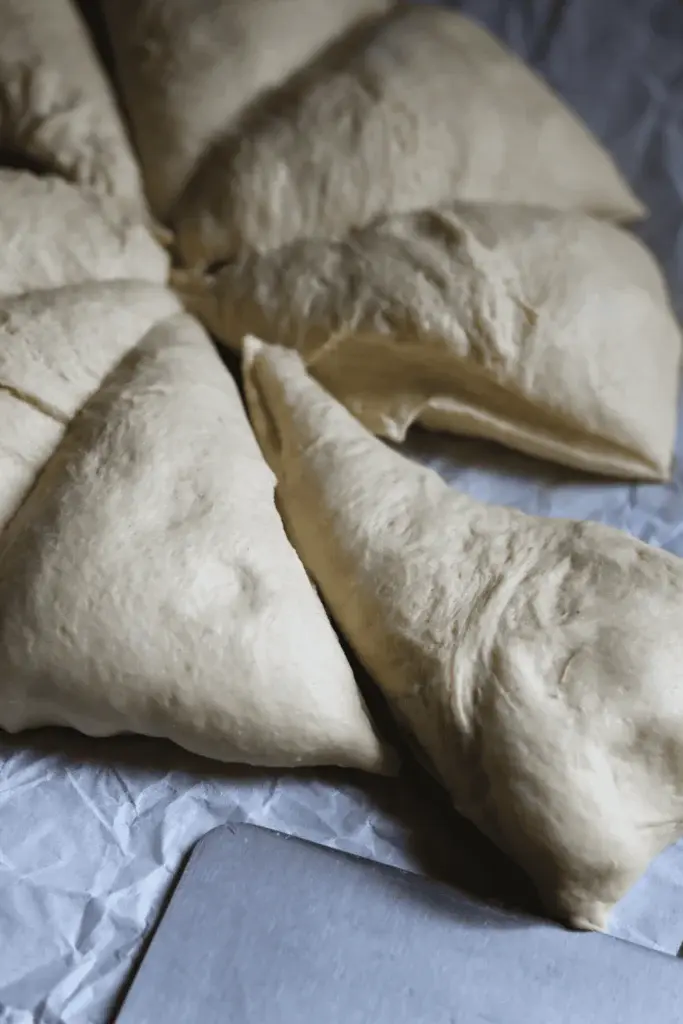
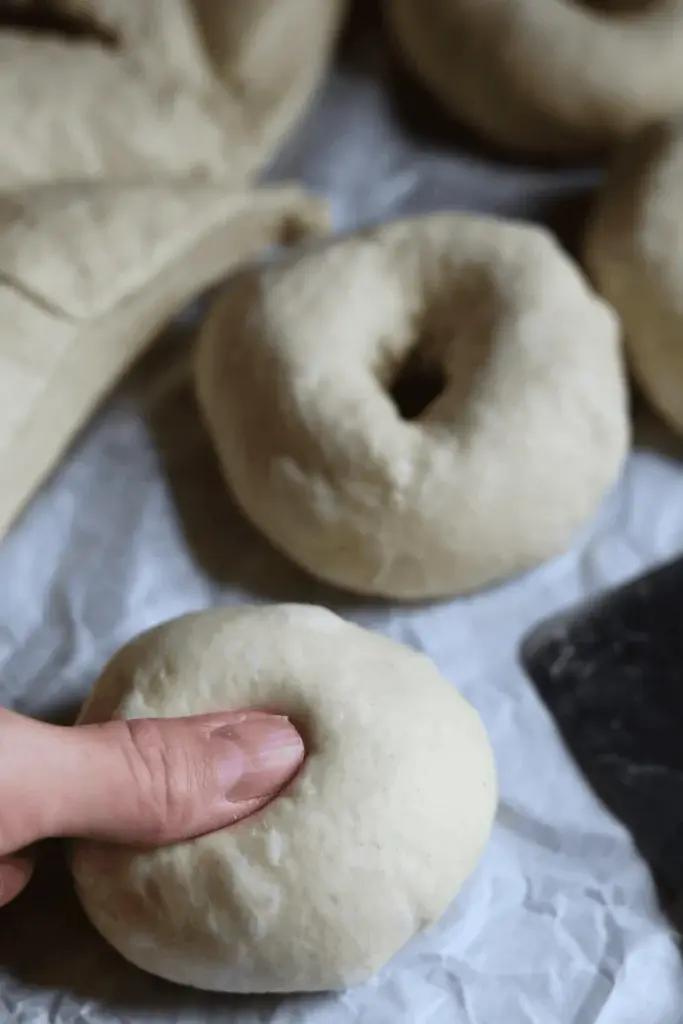
Step 7: Stretch and mould the dough into a big rectangle, roughly 1/2 inch thick. Using a bench scraper or a sharp knife, slice the dough into 8 equal triangle pieces (around 115g each).
Step 8: To shape it, take a piece of dough and pull the corners of the triangles into the centre. After that, roll the dough until it becomes a smooth ball. Do the same with the other pieces of dough.
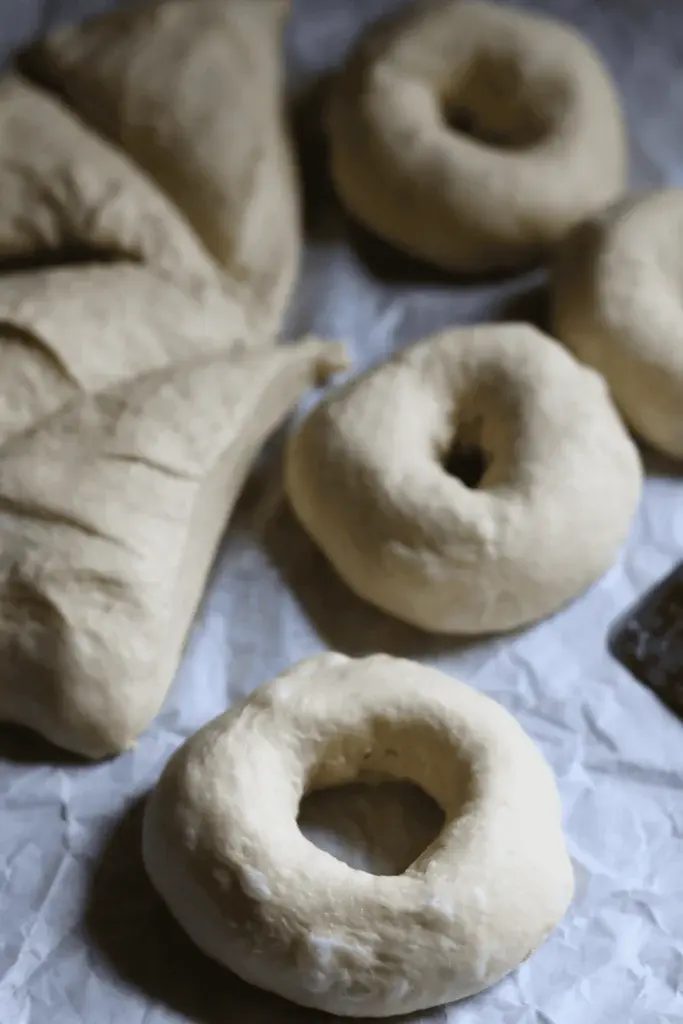
Step 9: Take it slow, and with your thumb, poke a hole right in the centre of the dough ball. Then, using both thumbs, stretch that dough ball out to about 2 inches.
Second Rise
Step 10: Put your shaped bagels on a baking sheet lined with parchment paper and cover them completely with a damp tea towel to keep them from drying out.
Step 11: Let them sit in a warm spot until they puff up, which should take around 20-60 minutes.
Boil Bath
Step 12: Start by filling a big pot with water. Toss in some honey and give it a good whisk until everything’s blended. Heat the water until it starts to boil.
Step 13: Gently add 2-3 bagels into the bubbling water and let them boil for 30 seconds on each side.
Step 14: With a slotted spoon, lift the bagels out and set them on a cooling rack. Keep going until you’ve boiled all the bagels.
Toppings
Step 15: Once you’ve boiled all the bagels, grab a small plate and sprinkle your toppings on it. Then, just dip the top of the bagel in! The bagels will feel a bit sticky, which is perfect for making the toppings adhere.
Bake
Step 16: Bake the Sourdough Bagels for 20-25 minutes at 425°F, or until they turn golden brown.
Step 17: Take the bagels out of the oven and let them cool on a wire rack.
Step 18: Enjoy them warm with your favourite toppings!
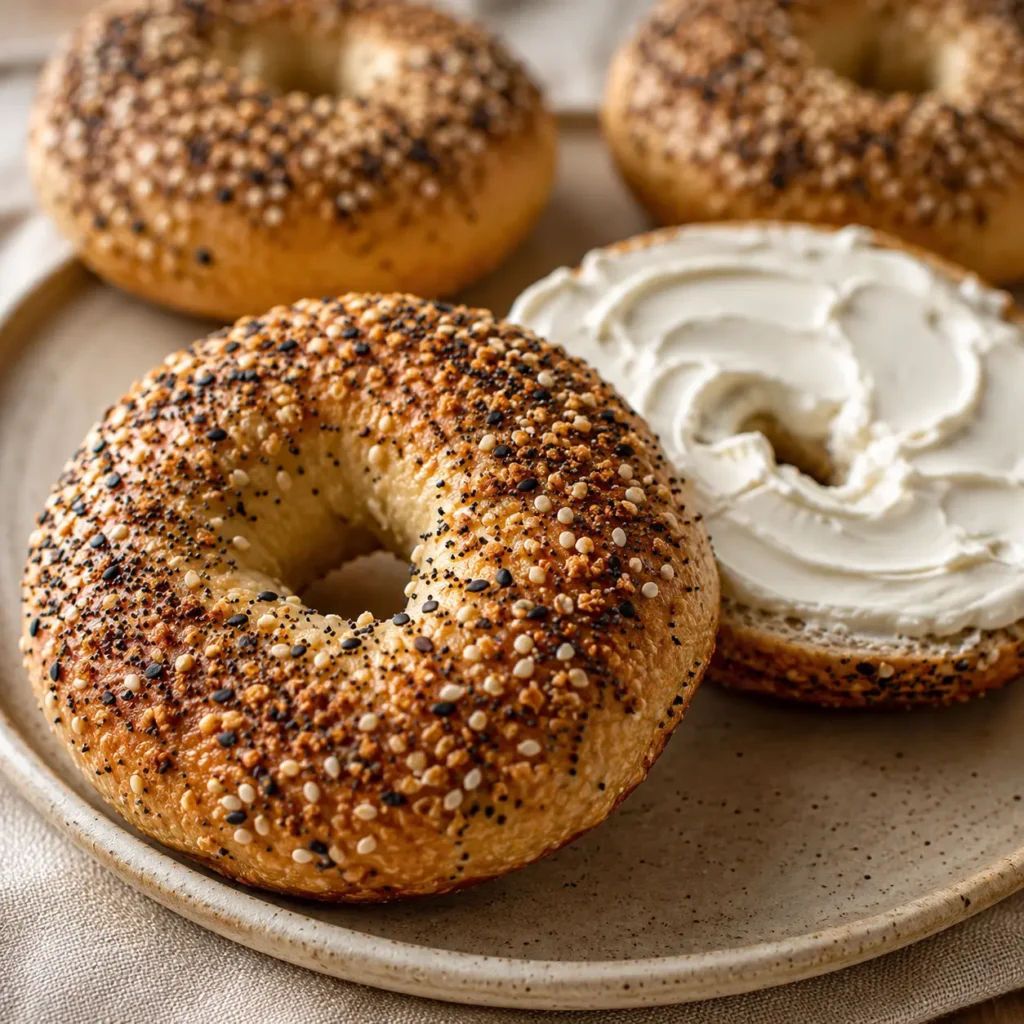
Topping Suggestions:
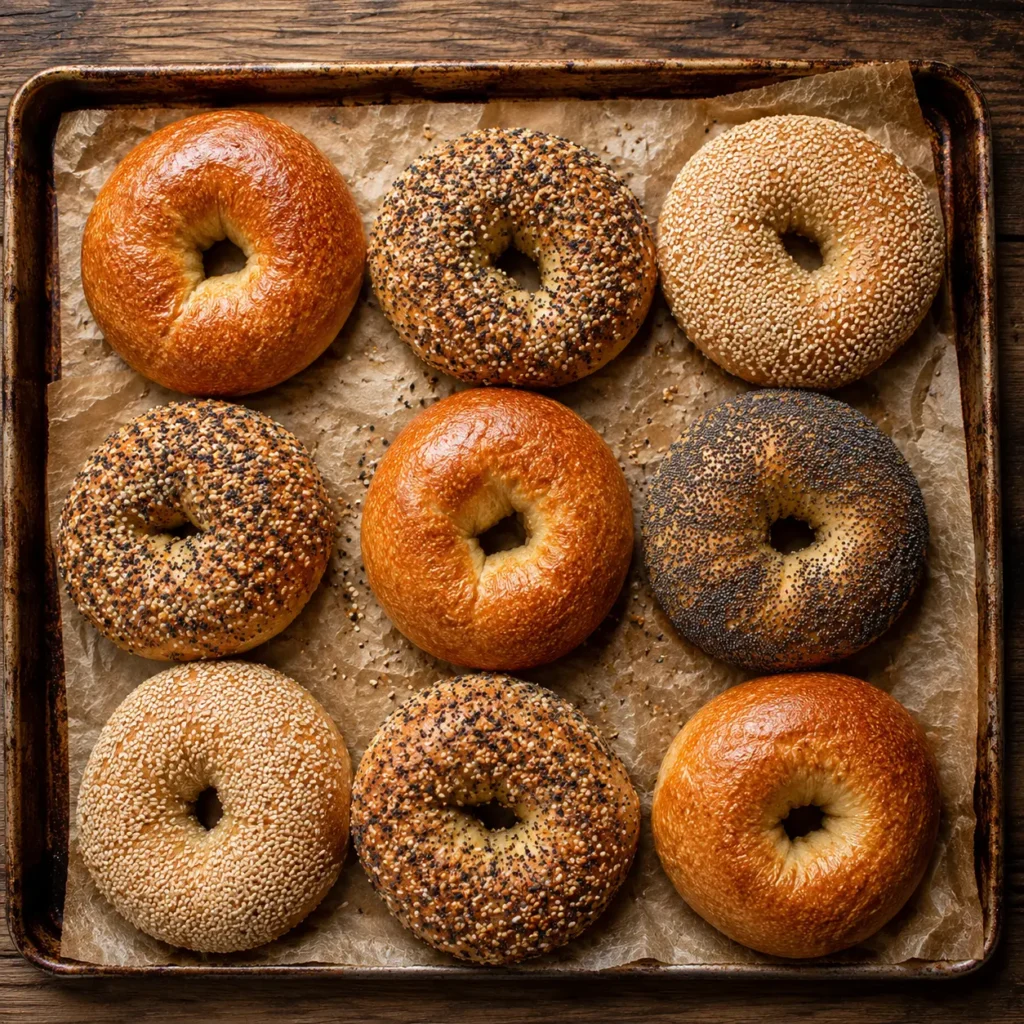
- Everything seasoning – a blend of white and black sesame seeds, onion and garlic flakes, and sea salt.
- Poppy seeds.
- Sesame seeds.
- Garlic flakes.
- Onion flakes.
- Cheese – like shredded Asiago cheese – so delicious! Sprinkle it on both the top and bottom for an extra crunchy bite.
- Cinnamon Crunch – a combination of brown, white, and coarse sparkling sugar, cinnamon, flour, vanilla, and butter.
Helpful Tips
Starter & Dough
| Tip | Details |
|---|---|
| Use starter at peak activity | Feed 4–6 hours before mixing. Should be bubbly, doubled, and pass the float test |
| Keep hydration low | Aim for 55–60% hydration. Stiff dough = proper chew. Add water 1 tsp at a time if needed |
| Knead fully | 10–12 min by hand, 8 min with stand mixer. Must pass the windowpane test before fermenting |
| Cold ferment overnight | Refrigerate shaped bagels 12–16 hours for deep tang and complex flavour |
Shaping
| Tip | Details |
|---|---|
| Use the rope method | Roll into a 25–28 cm rope, wrap around hand, seal ends on the counter |
| Seal the seam firmly | Pinch and roll on a dry surface. A loose seam splits open in the boil |
The Boil
| Addition | Amount | Purpose |
|---|---|---|
| Baking soda | 1 tbsp | Creates chew and glossy crust |
| Honey | 1 tbsp | Adds sweetness and deep golden colour |
| Salt | 1 tsp | Seasons the crust from the outside in |
| Boil time | 30–60 sec per side | Longer = chewier, thicker crust |
Baking
| The surface is sticky right after boiling, but toppings won’t stick if you wait. | Details |
|---|---|
| Top immediately after boiling | Surface is sticky right after boil toppings won’t stick if you wait |
| Preheat your baking surface | Use a stone, steel, or heavy tray. Creates better oven spring and crisper base |
| Oven temperature | 220°C / 425°F |
Common Mistakes & Fixes
| Dense, gummy inside | Fix |
|---|---|
| Dense, gummy inside | Starter wasn’t active or ferment was cut short give it more time |
| Pale, soft crust | Add baking soda to boil water and boil 45–60 sec per side |
| Too round, no chew | Hydration too high reduce water by 5% and knead fully |
Quick Pro Tips
| Cool on a wire rack 20 min before cutting, which prevents gummy crumb | Tip |
|---|---|
| 1 | Use bread flour (12–14% protein) for maximum chew |
| 2 | Don’t over-proof before the fridge dough should be firm, not puffy |
| 3 | Boil in a wide, shallow pan so bagels float freely |
| 4 | Cool on a wire rack 20 min before cutting prevents gummy crumb |
| 5 | Freeze unsliced; reheat at 190°C for 8 min for fresh-baked results |
How to Serve a Sourdough Bagel
Serving a sourdough bagel is where all your hard work pays off, and the options are endless. For a classic experience, slice your bagel horizontally with a serrated knife and spread generously with plain, chive, or smoked salmon cream cheese. If you’re feeling indulgent, layer on smoked salmon with capers, thinly sliced red onion, and a sprig of fresh dill for a true New York-style lox bagel. Avocado lovers can smash ripe avocado on a toasted half with a squeeze of lemon, chilli flakes, and a pinch of sea salt for a fresh, modern twist.
For a hearty breakfast or brunch, a fried or scrambled egg with melted cheddar and crispy bacon turns your sourdough bagel into a satisfying sandwich. If you prefer something on the lighter side, try ricotta with cherry tomatoes, fresh basil, and a drizzle of olive oil for a bruschetta-inspired bite. Sweet tooths aren’t left out either, butter and honey, almond butter with banana slices, or your favourite jam all pair beautifully with the slight tang of sourdough.
When it comes to toasting, a toaster gives you crispy edges with a soft centre in just 2–3 minutes. For a more even, bakery-style result, pop your bagel in the oven at 190°C for 6–8 minutes. A skillet with a little butter is worth trying too 2 minutes per side gives you a golden, caramelised cut face that’s hard to beat. That said, a freshly baked sourdough bagel within the first four hours needs no toasting at all. Simply slice, spread, and enjoy it as it is.
How to Store the Sourdough Bagel Recipe
Proper storage makes all the difference between a bagel that stays delicious and one that turns stale or soggy within hours. At room temperature, wrap your bagels in a clean cloth or paper bag rather than plastic. Plastic traps moisture against the crust, making it soft and chewy in all the wrong ways. Stored this way, your bagels will stay fresh for up to two days and are best enjoyed the same day or the morning after baking.
If you need them to last a little longer, an airtight container works well for up to three days. Keep them whole and unsliced for as long as possible. Once sliced, the exposed crumb dries out much faster. The refrigerator can extend freshness to around five days when bagels are wrapped tightly in cling film, but be aware that fridge air actually stales bread faster than room temperature over short periods, so only refrigerate when you genuinely need the extra time.
For longer storage, the freezer is your best friend. Wrap each bagel individually in cling film and place them in a freezer bag, then label with the date. Frozen sourdough bagels keep well for up to three months, though for the best flavour and texture, aim to eat them within six weeks. When you’re ready to enjoy one, reheat a whole frozen bagel in the oven at 190°C for 12–15 minutes, or pop frozen slices straight into the toaster for 3–4 minutes. If your bagels have sat out for a day and feel a little stale, run the cut side briefly under cold water and then toasting it revives the softness almost instantly and is one of the best-kept secrets of any home baker.
For More Guidance:
Why You’ll Love This Sourdough Bagel Recipe
Incredible Chewy Texture
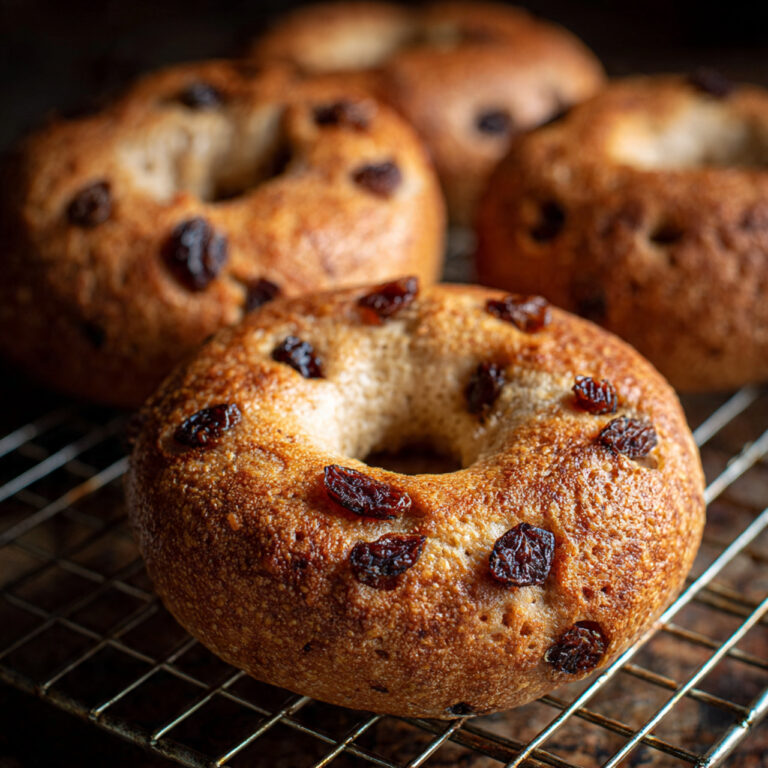
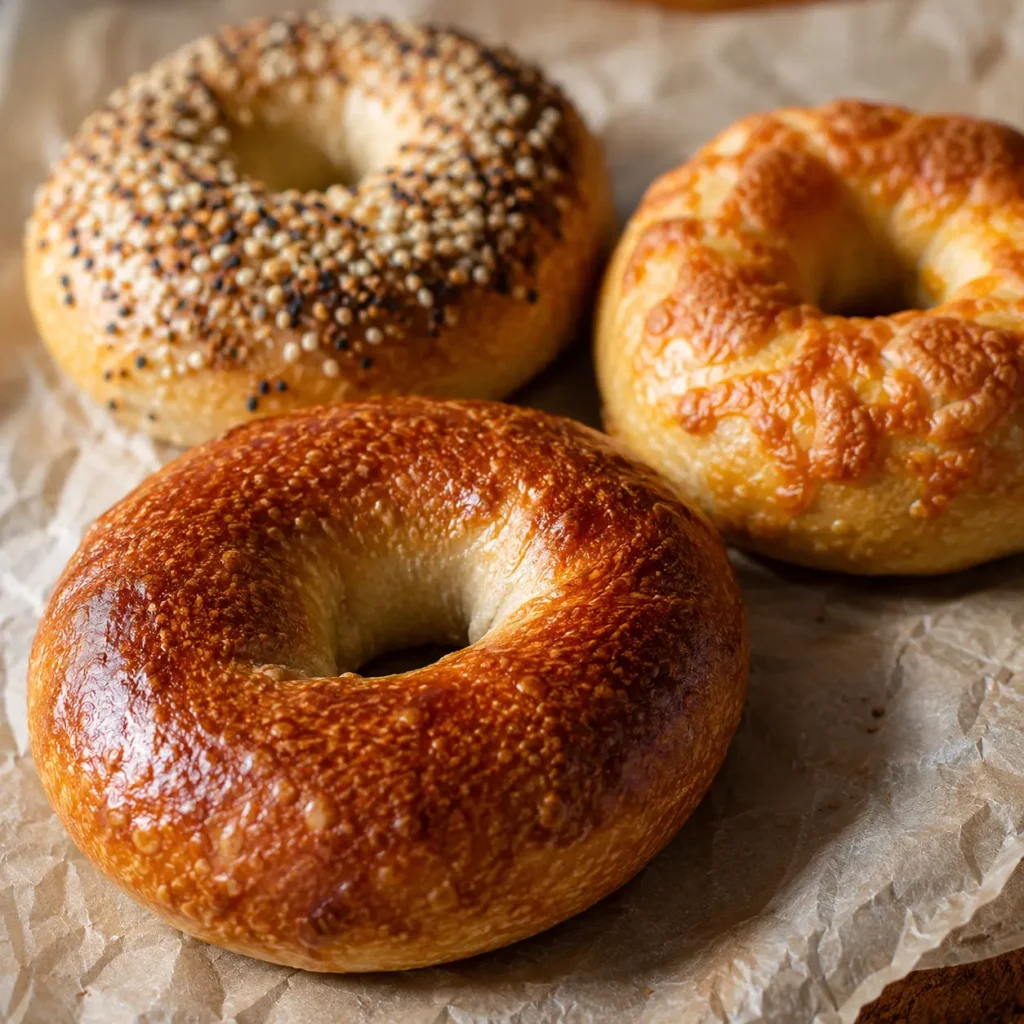
Once you make this sourdough bagel recipe at home, there is no going back. These sourdough bagels deliver everything you love: a chewy, glossy crust on the outside and a soft, airy crumb on the inside. That authentic New York-style chew you simply cannot get from a store-bought bag lives right here in this recipe. For a fun seasonal twist, also try the Sourdough Pumpkin Bagel Recipe.
Surprisingly Easy to Make
This sourdough bagel recipe is designed to be mostly hands-off, making it one of the easiest ways to learn how to make sourdough bagels from scratch. After a short kneading session and a simple shaping method, the dough does all the hard work overnight in the fridge. No complicated techniques, no special equipment, just a reliable sourdough bagel recipe that works every single time.
Endlessly Versatile
A plain sourdough bagel is a beautiful thing, but this recipe is also the perfect canvas for endless topping combinations. Sesame seeds, everything bagel seasoning, garlic, poppy seeds, jalapeño,o and chedd, ar the options that never run out. Whether you are baking for the week or feeding a crowd, this sourdough brioche recipe gives you real flexibility and flavour in every single batch.
Frequently Asked Questions
Can I make this sourdough bagel recipe without a stand mixer?
Absolutely. This sourdough bagel recipe works perfectly with just your hands. Knead the dough on a lightly floured surface for 10–12 minutes until it feels smooth and elastic. It is a stiff dough, so it takes a little effort, but hand-kneading actually gives you a great feel for when the dough is ready. Just look for that smooth, springy texture before you move on to bulk fermentation.
How do I know when my sourdough bagels are ready to bake after the cold ferment?
After 12–16 hours in the fridge, your sourdough bagels should look slightly puffed but still firm to the touch, not soft or overly risen. To do a simple poke test, gently press one bagel with your fingertip. If the indent springs back slowly, they are perfectly proofed and ready for the boil. If it springs back instantly, give them another hour. If it doesn’t spring back at all, move quickly to baking.
Why did my sourdough bagel recipe turn out dense and heavy?
The most common culprit is an underactive starter. If your starter wasn’t bubbly, doubled, and at peak activity before mixing, the dough won’t ferment properly, resulting in dense, flat bagels with little to no rise. Always feed your starter 4–6 hours before you begin, and make sure it passes the float test before using it. A fully active starter is the single most important factor in getting light, chewy sourdough bagels every time.
Happy baking!
Sourdough Bagel Recipe: Bakery Results at Home
Ingredients
For the Dough
- 500 g bread flour 12–14% protein
- 150 g active sourdough starter 100% hydration
- 270 ml warm water
- 10 g fine sea salt
- 15 g honey or malt syrup
For the Boiling Water
- 2 litres water
- 1 tbsp baking soda
- 1 tbsp honey
- 1 tsp fine salt
Toppings (Optional)
- Sesame seeds poppy seeds, or everything bagel seasoning — to taste
Instructions
Make the Dough
- In a large bowl, combine active sourdough starter, warm water, and sugar until it looks milky. Add bread flour and salt, then mix until fully combined.
- Lift and fold sections of the dough over itself while pressing down with the heel of your hand. Continue rotating the bowl and repeating for about 5–6 minutes.
- Cover the dough and let it rest for 60 minutes.
Stretch and Fold
- After resting, repeat the stretch, fold, and press motion for another 30 seconds.
- Cover the bowl and place the dough in a warm spot until it doubles in size.
Shape
- Once doubled, transfer the dough to your work surface without adding flour.
- Stretch the dough into a rectangle about 1/2 inch thick. Divide into 8 equal pieces (around 115g each).
- Shape each piece by folding the corners into the center, then rolling into a smooth ball.
- Use your thumb to poke a hole through the center and gently stretch it to about 2 inches wide.
Second Rise
- Place shaped bagels on a parchment-lined baking sheet and cover with a damp towel.
- Let them rise in a warm place for 20–60 minutes until puffed.
Boil Bath
- Fill a large pot with water, add honey, whisk together, and bring to a boil.
- Boil 2–3 bagels at a time for 30 seconds per side.
- Remove bagels with a slotted spoon and place on a cooling rack.
Toppings
- Spread toppings on a plate and dip the sticky tops of the boiled bagels into them.
Bake
- Bake at 425°F (220°C) for 20–25 minutes until golden brown.
- Remove from the oven and cool on a wire rack.
- Serve warm with your favorite toppings.
Notes
How to Store the Sourdough Bagel Recipe
- Store bagels at room temperature in a cloth or paper bag for up to 2 days to keep the crust from getting soggy.
- For slightly longer storage, keep them whole in an airtight container for up to 3 days.
- Refrigeration extends freshness to about 5 days if tightly wrapped, though refrigeration can dry bread faster.
- For freezing, wrap each bagel individually and place them in a freezer bag. They keep well for up to 3 months, ideally eaten within 6 weeks.
- To reheat frozen bagels:
- Whole bagel: bake at 190°C for 12–15 minutes.
- Frozen slices: toast for 3–4 minutes.
- To refresh stale bagels, lightly wet the cut side with cold water before toasting.