Sourdough Ciabatta Rolls: Easy Homemade Artisan Bread
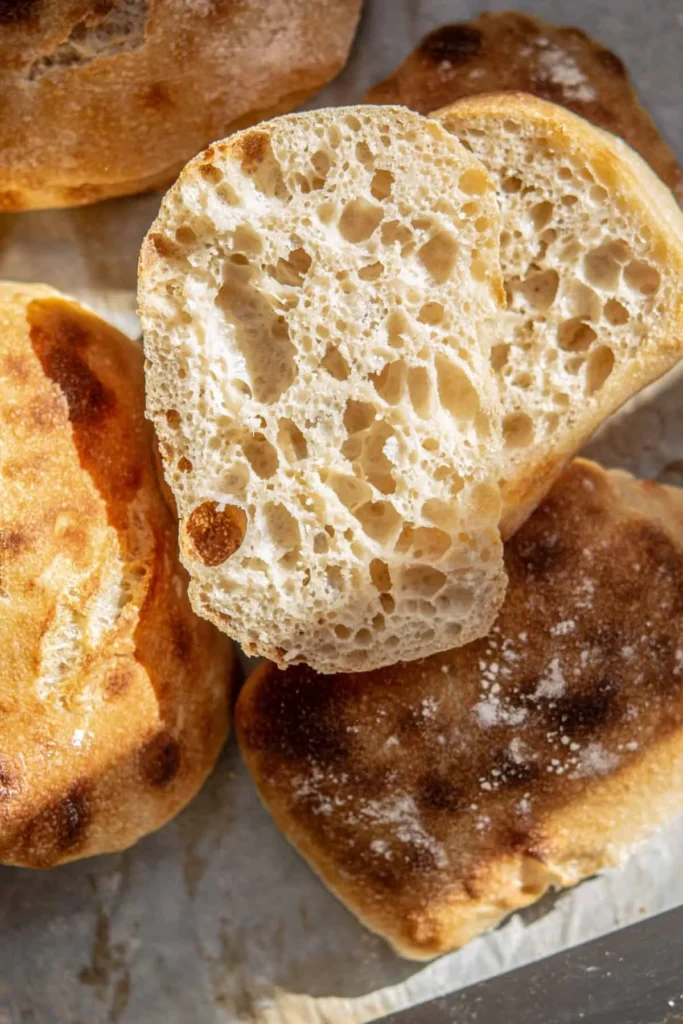
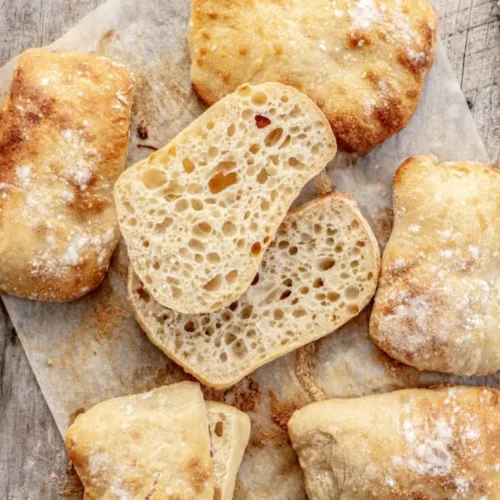
Sourdough Ciabatta Rolls combine the tangy depth of sourdough with the signature airy, hole filled crumb of Italian ciabatta. These rustic rolls feature a crispy, golden crust that shatters at first bite, revealing a soft, open interior perfect for sandwiches or serving alongside soups and salads. In this guide, you’ll learn how to make Sourdough Ciabatta Bread Rolls from scratch using your sourdough starter. We’ll cover everything from mixing and fermentation to shaping these delightfully wet doughs and achieving that professional bakery finish. Whether you’re a sourdough enthusiast or ciabatta lover, this recipe will become your new favorite.
Ingredients & Substitutions
* To find precise measurements, scroll to the bottom of this post to find the recipe card*
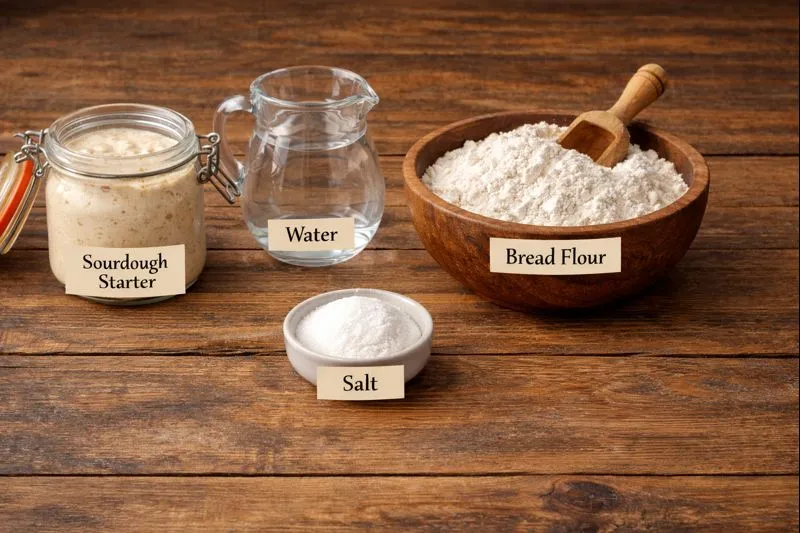
Sourdough starter: An active sourdough starter is the heart of this ciabatta bread recipe. It gives the rolls their beautiful rise, tangy flavor, and airy texture.
Water: Helps activate the sourdough starter, creating the perfect hydration for a light and airy crumb.
Bread flour: Provides the structure needed for a chewy interior and a crispy crust.
Salt: Balances the flavors and strengthens the dough for a well-rounded taste.
Supplies
Parchment Paper
Large mixing bowl
Danish dough whisk
Bench scraper
Rimmed baking sheet
Sample Sourdough Ciabatta Baker’s Schedule
This schedule is just a guide and works best if you keep the dough at around 68-70ºF.
Day 1:
9 AM – Prepare the dough
9:30 AM – Stretch and fold
10 – 11 AM – Coil folds
11 AM – Bulk fermentation
7 PM – Cover and place in the fridge
Day 2:
4 PM – Shape and rise
6 PM – Bake
How to Make Sourdough Ciabatta Bread
In a large bowl, add the bubbly starter and room temperature water. Mix with a Danish dough whisk until a milky white liquid.
Add the bread flour and salt to the liquids and mix until all of the flour has been incorporated.
It will be an extra-wet and sticky dough.
Cover and let the dough rest for 30 minutes.
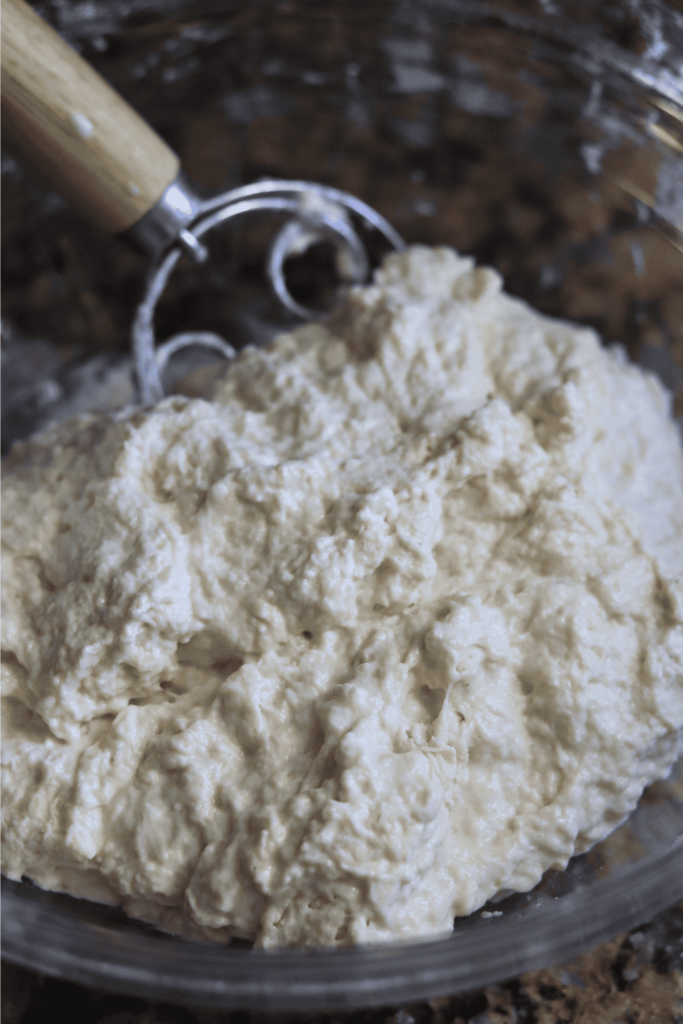
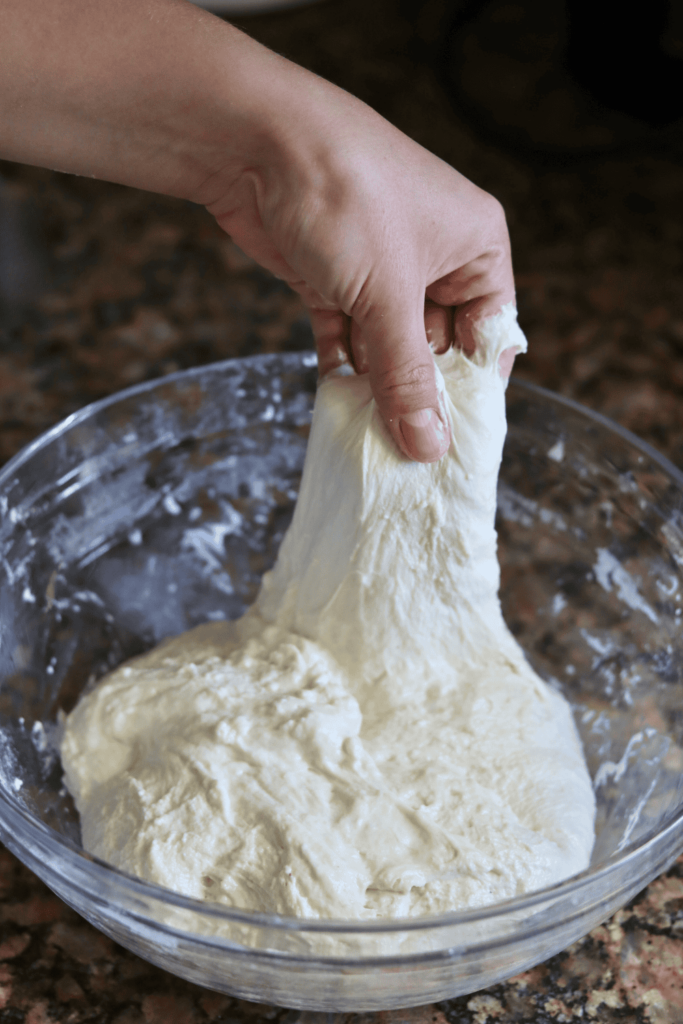
Stretch & Folds / Coil Folds
After 30 minutes, perform a set of stretch and folds.
Wet your hand and reach to the bottom of the dough. Pull it up and fold it over the top.
Turn the bowl and repeat 10-15 times until the dough starts to come together and isn’t as loose. Cover it and let it rest for another 30 minutes.
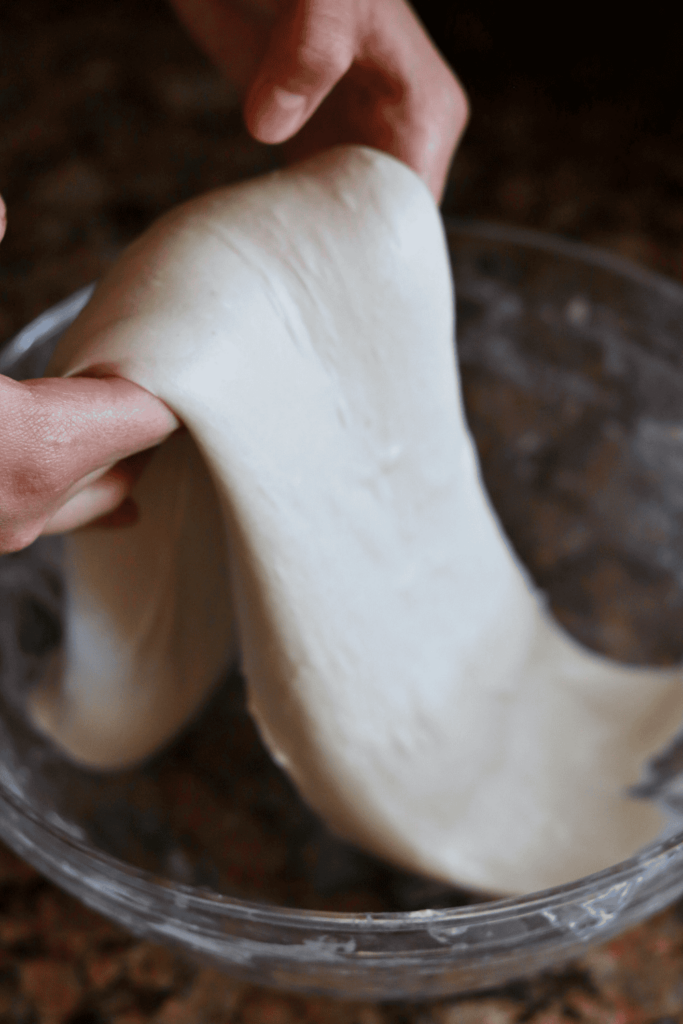
After 30 minutes, perform a coil fold. First lightly wet your hands, then reach over the dough and gently pull up, allowing the dough to slowly stretch. Once the dough releases from the bowl, fold the ends under itself.
Repeat once or twice. You will notice the dough will not stretch as far, but allow gravity to help stretch the dough.
Turn the bowl 45 degrees and repeat 1-2 coil folds until the dough no longer stretches. Cover and wait 30 minutes.
Perform a 3rd coil fold. Cover and wait 30 minutes. Perform a 4th set of coil folds.
Bulk Fermentation
Remove the dough from the bowl and place in a straight edge container, like a glass 8×8 baking dish. (This helps you to easily see when the dough has completed its bulk fermentation).
Cover the dough and let rest for the remainder of the bulk fermentation, about 6-8 more hours.
Keep an eye out for the dough to rise about 75%, with a dome shape in the middle, pulling away from the container edges, and a few bubbles around the sides before moving on to the next step.
Cold Ferment
Cover the container with a lid and place the dough in the fridge for 12-24 hours.
Shape & Second Rise
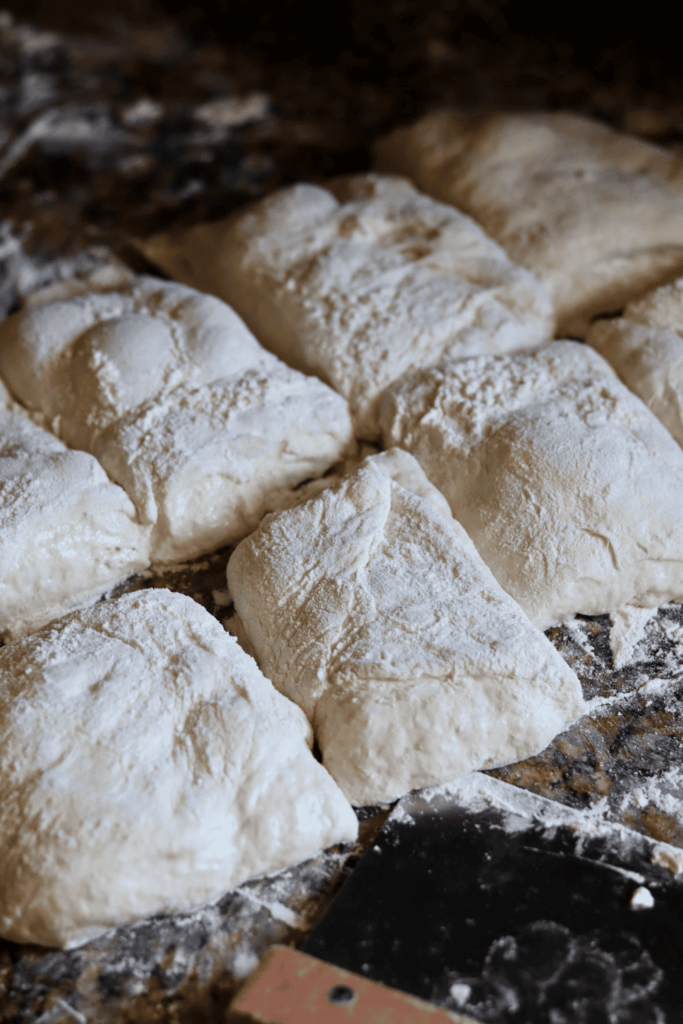
When ready to bake, sprinkle a generous amount of flour on top of the dough. Gently turn the dough out onto a floured work surface, then sprinkle the top of the dough with more flour.
Stretch the dough to a large rectangle, about 9×13 (does not need to be exact). With a bench scraper, divide the dough into 8 even pieces.
Line a rimmed baking sheet with a piece of parchment paper, then gently place each sourdough ciabatta roll onto the prepared baking sheet. Over with this plastic lid or a towel and let stand for 1-2 hours in a 70ºF environment to puff up. The rolls won’t double in size, but they will look light and airy.
Bake
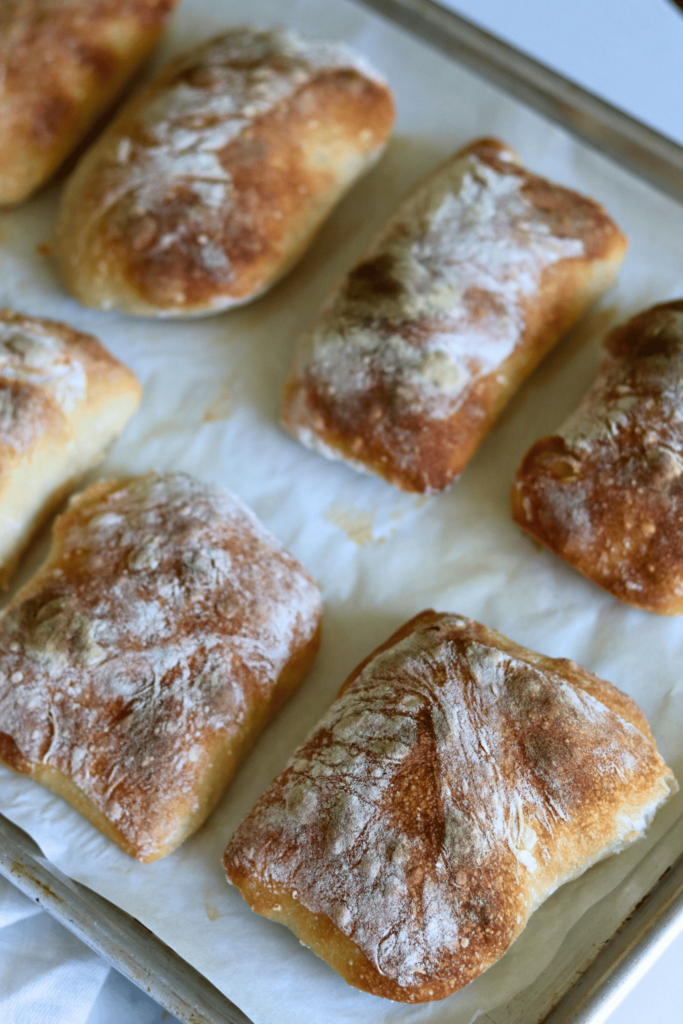
Preheat the oven to 475ºF. Place the pan in the oven and bake for 10 minutes. Lower the heat to 425ºF, rotate the pan, and bake for 20 minutes more. Remove the pan from the oven and allow the ciabatta rolls to cool on a wire rack for 20 to 30 minutes before slicing.
How to Serve Sourdough Ciabatta Bread Rolls
Fresh from the Oven: Serve warm within the first few hours for maximum crispiness. The crust will be at its crunchiest, and the interior perfectly soft and aromatic.
Sandwiches: Slice horizontally and fill with Italian deli meats, fresh mozzarella, tomatoes, and basil. The sturdy structure holds up beautifully to moist fillings without getting soggy.
Dipping: Tear into rustic pieces and serve alongside high-quality olive oil, balsamic vinegar, or marinara sauce for an authentic Italian appetizer.
Soup Companion: Pair with minestrone, tomato soup, or creamy bisques. The open crumb is perfect for soaking up broths and sauces.
Bruschetta Base: Toast slices and top with fresh tomatoes, garlic, and herbs for classic bruschetta.
Reheating: Spritz rolls lightly with water and warm in a 350°F (175°C) oven for 5-7 minutes to refresh the crust and restore that just-baked texture.
How to Store Sourdough Ciabatta Bread Rolls
Room Temperature (1-2 days): Store in a paper bag or bread box to maintain crust texture. Avoid plastic bags, which trap moisture and make the crust soft and chewy.
Bread Box Method: Place rolls in a ventilated bread box at room temperature. This balances moisture retention in the crumb while preserving crust crispness.
Freezing (up to 3 months): For longer storage, freeze rolls when completely cooled. Wrap individually in plastic wrap, then place in a freezer-safe bag. Remove excess air to prevent freezer burn.
Thawing Frozen Rolls: Remove from freezer and let thaw at room temperature for 2-3 hours, or thaw in the refrigerator overnight.
Refreshing Stored Rolls: Spritz with water and bake at 350°F (175°C) for 5-10 minutes to revive the crust. For frozen rolls, add an extra 2-3 minutes.
Avoid Refrigeration: Never store ciabatta in the refrigerator, as this accelerates staling and creates a tough, leathery texture.
Repurposing Stale Rolls: Transform day-old rolls into croutons, breadcrumbs, or panzanella salad rather than discarding them.

For More Guidance:
Why You’ll Love This Sourdough Ciabatta Bread Rolls Recipe
Incredible Flavor and Texture
Natural fermentation develops complex, mildly tangy notes that commercial yeast alone cannot replicate. The extended fermentation also enhances aroma and digestibility while allowing the wheat flavor to fully express itself. Structurally, these rolls deliver the defining ciabatta characteristics: a thin, lightly crisp crust and an open, airy crumb with irregular holes. This contrast makes them ideal for sandwiches, dipping, or serving alongside soups and salads without becoming dense or heavy.
Easy to Make
Although sourdough has a reputation for difficulty, this method is structured and accessible. The dough relies on time and proper hydration rather than intensive kneading. A series of folds builds strength efficiently, and the shaping process is intentionally minimal to preserve the open crumb. The steps are clear and repeatable, making the recipe suitable even if you are still developing confidence with sourdough handling.
Fit Your Busy Schedule
The fermentation schedule offers flexibility. Most of the process is passive, allowing the dough to develop flavor while you focus on other tasks. The dough can be fermented overnight, and the rolls bake quickly once shaped. They also store and freeze well, making it practical to bake a batch in advance and have high-quality bread available throughout the week.
Frequently Asked Questions
Can I make these sourdough ciabatta rolls without a very active starter?
A strong, active starter is important for proper fermentation and structure. If your starter does not double predictably within 4–6 hours after feeding, the dough may rise slowly, produce a dense crumb, or lack the desired open structure. To improve performance, feed your starter consistently for 1–2 days before baking and use it at peak activity—when it has risen fully and just begins to level off. This ensures adequate leavening power and balanced acidity.
Why is my ciabatta dough so sticky, and should I add more flour?
Ciabatta is a high-hydration dough, which is essential for achieving the open, airy crumb. Stickiness is expected and does not indicate a problem. Adding excess flour will make handling easier but will compromise texture, resulting in tighter crumb and heavier rolls. Instead, use wet or lightly oiled hands, a bench scraper, and gentle folding techniques to manage the dough while preserving hydration.
How should I store and reheat the rolls?
For short-term storage (1–2 days), keep the rolls at room temperature in a paper bag or loosely wrapped in a kitchen towel to maintain crust texture. For longer storage, freeze them once fully cooled in an airtight bag. To reheat, place frozen rolls directly in a preheated oven at moderate temperature for several minutes until the crust recrisps and the interior is warmed through. Avoid microwaving, as it softens the crust and produces a rubbery texture.
Happy baking!
Sourdough Ciabatta Rolls Recipe
Ingredients
- 120 g 1/2 cup active and bubbly sourdough starter
- 400 g 1 2/3 cups water
- 500 g 3 1/2 cups bread flour
- 12 g 2 teaspoons salt
Instructions
- In a large bowl, add the bubbly starter and room temperature water. Mix with a Danish dough whisk until a milky white liquid.
- 120g starter, 400g water
- Add the bread flour and salt to the liquids and mix until all of the flour has been incorporated. It will be an extra-wet and sticky dough.
- 500g flour, 12g salt
- Cover and let the dough rest for 30 minutes.
- After 30 minutes, perform a set of stretch and folds. To do so, wet your hand and reach to the bottom of the dough. Pull it up and fold it over the top. Turn the bowl and repeat 10-15 times until the dough starts to come together and isn’t as loose. Cover it and let it rest for another 30 minutes. *see pictures above for reference.
- After 30 minutes, perform a coil fold. First lightly wet your hands, then reach under the dough and gently pull up towards you, allowing the dough to slowly stretch. Once the dough releases from the bowl, fold the ends under itself. Repeat once or twice. You will notice the dough will not stretch as far, but allow gravity to help stretch the dough. *see pictures above for reference.
- Turn the bowl 45 degrees and repeat 1-2 coil folds until the dough no longer stretches. Cover and wait 30 minutes.
- Perform a 3rd coil fold. Cover and wait 30 minutes. Perform a 4th set of coil folds.
- Remove the dough from the bowl and place in a straight edge container, like a glass 8×8 baking dish. (This helps you to easily see when the dough has completed its bulk fermentation).
- Cover the dough and let rest for the remainder of the bulk fermentation, about 6-8 more hours. Keep an eye out for the dough to rise about 75%, with a dome shape in the middle, easily pulling away from the container edges, and a few bubbles around the sides before moving on to the next step.
- Cover the container with a lid and place the dough in the fridge for 12-24 hours.
- NOTE: If you’d like to bake the Sourdough Ciabatta Rolls on the same day, instead of a cold ferment in the fridge, divide and shape the rolls and let them rise until puffy, then bake. (Since this is a high-hydration dough, the dough will be very sticky, so generously flour your work surface.)
- When ready to bake, sprinkle a generous amount of flour on top of the dough. Gently turn the dough out onto a floured work surface, then sprinkle the top of the dough with more flour.
- Stretch the dough to a large rectangle, about 9 inch x 13 inch (does not need to be exact). With a bench scraper, divide the dough into 8 even pieces.
- Line a rimmed baking sheet with a piece of parchment paper, then gently place each sourdough ciabatta roll onto the prepared baking sheet. Cover with this plastic lid or a towel and let stand for 1-2 hours in a 70ºF environment to puff up. The rolls won’t double in size, but they will look light and airy.
- Preheat the oven to 475ºF. Place the pan in the oven and bake for 10 minutes. Lower the heat to 425ºF, rotate the pan, and bake for 15-20 minutes more, or until the tops are golden brown and crusty.
- Remove the pan from the oven and allow the ciabatta rolls to cool on a wire rack for 20 to 30 minutes before slicing.