Sourdough Ciabatta Rolls Recipe
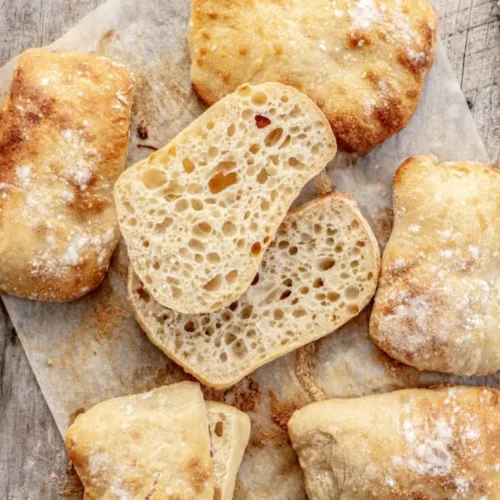
Perfect Sourdough Ciabatta Bread Rolls Recipe with a crispy crust, light and chewy inside. Easy, no-fuss recipe with flexible baking schedules included!
Ingredients
- 120 g 1/2 cup active and bubbly sourdough starter
- 400 g 1 2/3 cups water
- 500 g 3 1/2 cups bread flour
- 12 g 2 teaspoons salt
Instructions
- In a large bowl, add the bubbly starter and room temperature water. Mix with a Danish dough whisk until a milky white liquid.
- 120g starter, 400g water
- Add the bread flour and salt to the liquids and mix until all of the flour has been incorporated. It will be an extra-wet and sticky dough.
- 500g flour, 12g salt
- Cover and let the dough rest for 30 minutes.
- After 30 minutes, perform a set of stretch and folds. To do so, wet your hand and reach to the bottom of the dough. Pull it up and fold it over the top. Turn the bowl and repeat 10-15 times until the dough starts to come together and isn’t as loose. Cover it and let it rest for another 30 minutes. *see pictures above for reference.
- After 30 minutes, perform a coil fold. First lightly wet your hands, then reach under the dough and gently pull up towards you, allowing the dough to slowly stretch. Once the dough releases from the bowl, fold the ends under itself. Repeat once or twice. You will notice the dough will not stretch as far, but allow gravity to help stretch the dough. *see pictures above for reference.
- Turn the bowl 45 degrees and repeat 1-2 coil folds until the dough no longer stretches. Cover and wait 30 minutes.
- Perform a 3rd coil fold. Cover and wait 30 minutes. Perform a 4th set of coil folds.
- Remove the dough from the bowl and place in a straight edge container, like a glass 8x8 baking dish. (This helps you to easily see when the dough has completed its bulk fermentation).
- Cover the dough and let rest for the remainder of the bulk fermentation, about 6-8 more hours. Keep an eye out for the dough to rise about 75%, with a dome shape in the middle, easily pulling away from the container edges, and a few bubbles around the sides before moving on to the next step.
- Cover the container with a lid and place the dough in the fridge for 12-24 hours.
- NOTE: If you'd like to bake the Sourdough Ciabatta Rolls on the same day, instead of a cold ferment in the fridge, divide and shape the rolls and let them rise until puffy, then bake. (Since this is a high-hydration dough, the dough will be very sticky, so generously flour your work surface.)
- When ready to bake, sprinkle a generous amount of flour on top of the dough. Gently turn the dough out onto a floured work surface, then sprinkle the top of the dough with more flour.
- Stretch the dough to a large rectangle, about 9 inch x 13 inch (does not need to be exact). With a bench scraper, divide the dough into 8 even pieces.
- Line a rimmed baking sheet with a piece of parchment paper, then gently place each sourdough ciabatta roll onto the prepared baking sheet. Cover with this plastic lid or a towel and let stand for 1-2 hours in a 70ºF environment to puff up. The rolls won’t double in size, but they will look light and airy.
- Preheat the oven to 475ºF. Place the pan in the oven and bake for 10 minutes. Lower the heat to 425ºF, rotate the pan, and bake for 15-20 minutes more, or until the tops are golden brown and crusty.
- Remove the pan from the oven and allow the ciabatta rolls to cool on a wire rack for 20 to 30 minutes before slicing.