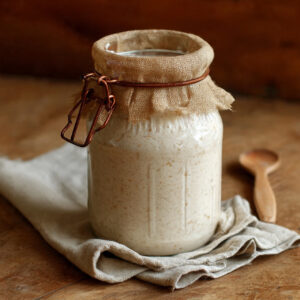
Sourdough Starter Recipe
A simple homemade sourdough starter recipe using only flour and water. Perfect for beginners who want to bake naturally fermented bread.
Ingredients
- 1 cup unbleached all-purpose flour
- ½ cup filtered water
- Extra flour & water for daily feeding
Instructions
Day-by-Day Feeding Schedule
- Day 1: Mix 1/2 cup flour with 1/4 cup water in a clean jar. Stir until no dry flour remains. The consistency should resemble thick pancake batter. Cover loosely with a cloth or lid (don't seal tightly the culture needs oxygen). Leave at room temperature in a draft-free spot.
- Day 2: The mixture may not show much activity yet. This is completely normal. No feeding required today just check on it and give it a stir.
- Day 3: Small bubbles might start appearing. Discard half the mixture (or about 1/2 cup) and feed with 1/2 cup fresh flour and 1/4 cup water. Stir well and cover loosely again.
- Day 4: More bubbles should be visible, and the mixture may have a slightly sour smell. Repeat the discard and feeding process from Day 3.
- Day 5: The starter should be noticeably more active, with bubbles throughout and possible volume increase. Continue daily discarding and feeding.
- Day 6: Activity should be strong now. The starter might double in size between feedings. Maintain the daily feeding schedule.
- Day 7: The starter should be ready if it consistently doubles within 4-6 hours after feeding and shows plenty of bubbles.
- Consistency is key throughout this process. Feeding at roughly the same time each day helps establish a predictable rhythm. Room temperature affects timing warmer kitchens may see faster development.
Signs Your Starter is Ready to Use
- A mature, active starter displays several telltale characteristics. It should double in volume within 4-6 hours of feeding, creating a domed top with a network of bubbles throughout. The texture becomes light and airy, almost mousse-like.
- The "float test" provides a reliable readiness check. Drop a small spoonful of starter into a glass of water if it floats, it's ready to bake with. Sinking indicates it needs more time or more frequent feedings.
- A pleasant, tangy aroma similar to yogurt or beer signals healthy fermentation. Overly sharp or acetone-like smells suggest the starter is hungry and needs feeding. The mixture should have a slightly sweet-sour smell that's appealing, not off-putting.
- Visual cues matter too. A healthy starter shows distinct layers with clear liquid (called "hooch") occasionally forming on top. This dark liquid is harmless just stir it back in before feeding or pour it off if a milder flavor is preferred.
Notes
- Use filtered water for best results
- Keep starter at 70–75°F
- If inactive, continue feeding daily